Bioshock Infinite: What the Hell Just Happened?

That’s the question on everyone’s mind. Or at least it was the question on my mind when I finally finished Bioshock Infinite, and if your mind doesn’t work like mine then frankly I don’t want to know you.

Since understanding what the hell is going on is integral to being able to understand the narrative and the wonderful nuances behind it, I’ve decided to make that the first article in this series. I’m going into this assuming you played through the game, it helps if you’ve played through it twice but isn’t obligatory. Since Bioshock: Infinite gives no definitive answers to anything, almost everything is open to interpretation, so the following includes a lot of speculation on my part but I’ve pieced together the story as accurately as I can.

Lutece and the Beginning

Heads or Tails?

There is Method to their Madness.

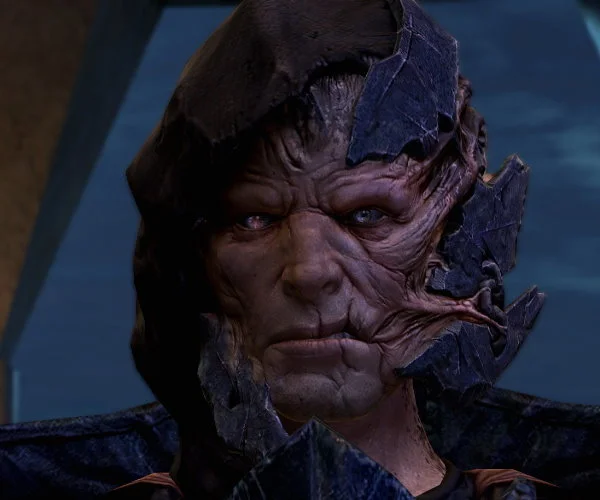
The first time I played through Bioshock Infinite the Lutece twins didn’t appear that important to the story, and in fact I thought they were a bit of a deus ex machina when they revealed the trick to controlling Songbird. Upon a second playthrough though, and after much reflection on the story, the Lutece twins are actually critical to the story. Much of the action that unfolds during the game is a direct result of their actions and there’s a reason they’re the first characters we meet in the game: they are the ones who began this story.

The beginning of Bioshock Infinite isn’t really the beginning of the story and part of the reason the game’s narrative is so hard to follow at first is because we’re only seeing a small piece of the story. The true beginning revolves entirely around Lutece and her discovery of quantum particles, the theoretical technology that allows Columbia to float and allows the interdimensional travel that dominates the game’s setting. From what I’ve been able to piece together, Lutece’s discovery and subsequent harnessing of the quantum particles is the inciting incident that sets off the entire story. After all, without a floating Columbia and the ability to see into future realities, Comstock would have been just another cult leader that would have faded into obscurity.

The actual sequence of events is more difficult to piece together, was this before or after the Wounded Knee massacre, did Comstock find her first or did she find him. There are countless questions, but regardless of the answers, it’s clear that eventually Lutece needed further funding in order to continue her work. Either Comstock or the US government grants her that funding, leading her to a practical application for her  quantum particles and the creation of Columbia. Whether it’s Comstock that directs Lutece to begin research into opening interdimensional windows, or it was Lutece’s idea and Comstock just later found a way to corrupt it, I don’t know. Regardless, it’s while experimenting with this technology that Lutece meets her brother.

Except it’s not her brother in the traditional sense, but rather herself from a different reality where the sperm that impregnated her mother’s egg carried a Y chromosome instead another X.

Wow, that got real weird, real fast. God I love this game.

Wow, that got real weird real fast. God I love this game.

Eventually Lutece succeeds in bringing her “brother” from the other universe and the two begin their strange love-affair with quantum physics, completely uncaring that they’re working for a monster so long as their scientific curiosity is sated. As we all know, this comes to bite them in the ass later down the road.

Comstock uses Lutece’s experiments to see “visions” of the future and cement his god-like position as The Prophet of Columbia. Much like Marie Curie when she discovered radium, though, neither Comstock nor the Luteces understand the dangers of the radiation being produced by their experiments. Comstock becomes sterilized and stricken with malignant cancer, spurning him on to find an heir to carry on his legacy.

Comstock turns his floating paradise into a floating war machine and destroys his political enemies while the Luteces are forced to frantically find a way to obtain Comstock an heir. That’s when they stumble onto our friend and protagonist Booker Dewitt, a Comstock who did not take the baptism and who never pursued research in theoretical physics, and who fathered a daughter. Even better, Booker is a broken man, an alcoholic gambler who is so bent on self-destruction that it seems there’s no end to the depth he’s willing to fall into. They offer a deal: Give us the girl and wash away the debt.

He does, and Comstock raises her as his own. The Lutece twins continue to do research on the girl, who has been given amazing powers since her transferal from one universe to another. As Lutece comments in one of her tapes, perhaps this is the universe’s way of correcting itself. I’ll touch on that later down the road, so keep it in mind. Comstock succeeds in raising Anna as his daughter, but in doing so he becomes more power hungry and more sadistic in his treatment of his enemies. Everyone who knows the truth about Anna is eventually killed in order to secure Comstock’s legacy, and ultimately the Luteces end up buried side by side after being executed by Comstock.

Anna becomes the Seed who Sits Upon the Throne, and Drowns in Fire the Cities of Men. New York burns and the world is left in a state of chaos.

The end of one story, and the start of another.

The end of one story, and the start of another.

Death is Only the Beginning

The Luteces, though dead, are alive. As they repeatedly tell us during the course of the game: Lived, Live, Will Live. Dead, Died, Will Die. Yes, they are dead, but they are also still alive in the past. The Luteces experiments have made them much more perceptive to the changes in time and history than the other characters, and knowing where their fate lies, endeavor to change it. Lutece speculates in one tape that continually moving through universes dilutes and eventually erases a persons individuality. Which is why, by the time we run across them, they act and speak almost identically.

Anyway, they need to stop Comstock from completely wrecking the timeline and the universe with their technology, but much like Booker they can’t change the choices they’ve already made. It has happened and it will happen. The only thing left to do is fling someone else into the equation, a variable that will allow them to change the events of their lives. Booker DeWitt is their variable. Their dialogue suggests that they’ve used Booker countless times already (you can collect audiologs from a universe where he failed), throwing him into different universes trying to find one where he succeeds and undoes the damage they unwittingly inflicted. In a way the Luteces are much like Anna at the end of the game, only far less powerful. Whereas Anna can move through every universe with ease, and see every strand of history and time as a single tapestry, the Luteces are far more limited. They can only see one string at a time, and they’ve been patiently pulling each one with Booker DeWitt, hoping to find the one that will unravel the whole mess. Obviously I can’t answer how exactly this works, and an explanation would likely just ruin the whole story, so in the end just accept that the Luteces have somehow learned to shift through dimensions and enjoy the story.

We finally arrive at the beginning of the game: Booker DeWitt being rowed to yet another lighthouse containing yet another universe. With this context you understand why the two Luteces are arguing during the opening moments, they’ve tried this experiment countless times before and it’s never worked, but like the male Lutece says “Just because an experiment has failed, doesn’t necessarily mean it will fail.”

They drop Booker off at his latest destination and Bioshock Infinite officially begins.

You still with me?

Of course you are, because this is the part that makes sense.

Of course you are, because this is the part that makes sense.

Booker DeWitt, Elizabeth and The Universe 

I’ll be covering the events of the actual game in another article, but for the purposes of this article I’m assuming everyone has already played through the game, so I’ll be skipping to the ending that boggled everyone’s mind.

Comstock is dead, Songbird is a scrapheap at the bottom of the ocean, and the Siphon that was limiting Elizabeth’s power is gone. With her powers fully unlocked Elizabeth brings us to the Lighthouse Forest (hey shut up, you come up with a better name for it) representing the infinite entrances to infinite realities. So first of all, how the hell does Elizabeth know how to get here?

Well now we need to go back to one of Lutece’s audiologs, the one where she speculates that the origin of Elizabeth’s powers are the result of the universe attempting to correct itself. Comstock has royally pissed off time and space by fucking with things that were not meant to be fucked with. Perhaps the Luteces are also an attempt by the universe to repair the damage wrought by Comstock’s insanity, allowing them to pull DeWitt from his native universe and using him as a wildcard to try and repair everything. Regardless, something draws Elizabeth to a very specific point in time and space: the river where Booker DeWitt and Comstock both arrived to try and wash away their sins. Comstock went through with it while DeWitt refused. This is a focal point in history where Elizabeth has the chance to eliminate Comstock forever. As Comstock speculates in one of his audiologs:

“Who is the man under the water? Perhaps he is both Sinner and Saint.”

From this point history diverges: thousands of universes are created as Comstocks go on to create the nightmarish dystopias in countless Columbias and thousands of Dewitts go on to rescue thousands of Annas/Elizabeths. Our DeWitt succeeded but the other Elizabeths that appear here seem to indicate that countless others failed. Too many Annas to save, too many Comstocks to stop, and too much pain to erase. They can’t fix all of the infinite universes one at a time.

But here, in this river at this moment in time, they can stop this entire chain of events before they unfold.

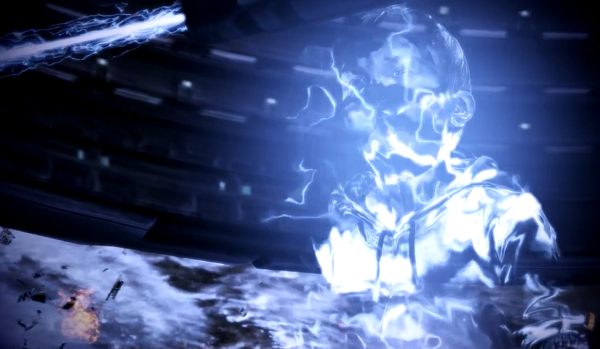
And so DeWitt makes the ultimate sacrifice. He allows himself to drown.

Symbolism

Comstock is never reborn, he never crosses the barrier between worlds and Elizabeth is spared a life of pain and isolation.

And that’s what the hell happened.

And why Bioshock: Infinite is awesome.

About these ads

, , , , , , , ,

8 Comments

Dead Ends Aren’t Always What They Appear

So you’re all probably wondering why the other articles on Bioshock: Infinite haven’t arrived yet. The short answer is that I have the rough drafts of two articles already written up and hopefully I’ll have them up by next week. The long answer is a bit more complicated. This is going to look a lot like a “poor pitiful me” post, but I’d ask for your patience because it’s actually a very positive article.

While I was writing the first article another one of my teeth began to bother me (you might recall that I had one of my wisdom teeth removed about six months ago). This tooth wasn’t nearly as bad as that one though, and as long as I avoid using that entire side of my mouth to eat I can live with it. Still I went to the dentist to see how much it would cost to get it taken out. Unlike last time, which was an emergency situation given the crippling pain I was in, the dentist decided to take a full-mouth X-ray to see what was up. And it turns out my sore tooth is the least of my problems.

My remaining lower wisdom tooth is packed so tightly against my molar that it’s impossible to floss and keep clean, so now I’ve got an infection that’s not only eating both teeth from the inside out but also eating away at my jawbone as well. This scared me because I don’t feel any pain in my jaw or those teeth, and learning that I have this horrific bacteria literally eating my face from the inside out was a bit of a shock too. Meanwhile, all of my other teeth have cavities, yes all of them. Right now they’re relatively small and harmless, but if I don’t have some serious dental surgery within the next couple of years to repair them I’ll either be toothless or in agony within five years. So how did my teeth get into this state?

Clinical Depression. As my long time readers will know I suffered from clinical depression for most of my life, I was diagnosed in Elementary school and it didn’t go into remission until I was 19. I didn’t have the energy to even get out of bed most of the time, or even shower on a regular basis, so you can imagine what my oral hygiene was like. So yes, the state of my mouth is the result of over ten years (give or take, I don’t remember when all my adult teeth appeared) of only brushing once or twice a year. In fact I’m surprised dental schools aren’t begging me for the right to poke at my teeth, surely teeth as disintegrated as mine would be a great teaching aid. I brush and floss almost obsessively now, but I can’t undo the damage that’s already there.

Which on the bright side means I'm a shoe-in for a role if they ever remake Deliverance.

On the bright side, I’d be perfect for a role in a Deliverance remake. 

Given where I’m at right now professionally, it’s not likely I’ll be able to afford the surgery necessary to repair my teeth in time and so I’m facing the unpleasant prospect of having my dentures accidentally falling into a woman’s mouth when I kiss her. Still, that’s not the worst of fates, it’s not like I was diagnosed with cancer or ALS or something. I’ve also forgiven myself for having not taken care of myself when I was younger; I was a teenager with hormone issues and a neurochemical imbalance, just surviving that mess is enough for me. What made me withdraw into my room and play video games for the past two weeks though, is what that toothless future represents.

I’ll be 25 years old this week. I’m still living at home. After a year of job-searching I’m still unemployed, and every subsequent year I go without a stable job makes it more difficult to find one in the future. And the income from my freelance writing is so low that I can only afford to rip out my wisdom teeth one at a time. I haven’t made this public knowledge to many (until now I suppose), but I’ve also been looking into going back to college. With a highschool GPA of 1.1 though I get weeded out of university admissions process by the computer without my essays (the one thing in my favor) ever making it to  a human being’s desk. And the 150-200k of student debt that I would be required to buy my way into a private university makes me feel queasy.

What my teeth did was make me look at my situation. What those lousy, rotten teeth did was trick me into believing I’m at a dead end in my life. That is what has made me so depressed these past few weeks that I haven’t wanted to go out and see friends, or go out for a walk or, most importantly, update my blog.

After all, the article explaining this mindfuckery won't write itself.

After all, the article explaining this mindfuckery won’t write itself.

The fact that I have a steady readership here is proof enough that I’m a good writer, a young writer with plenty to learn for sure, but a good writer none-the-less. I lost faith there for a while because physically, I’m in the exact same place I was two years ago. Yet in those two years I’ve made leaps and bounds both emotionally and professionally. The fact that I’m in the same place physically shouldn’t bother me, especially since the average age for a child to move out is now close to thirty years old, so I’m still way ahead of the curve. Which brings me to my economic hardships which really…aren’t that hard. I still live at home and the money I make is enough to pay down my debts, and best of all I’m getting paid to write. How awesome is that? Sure it’s not a lot, but a couple years down the road who knows what might happen.

So really, my hopeless, dead-end situation isn’t as bad as I thought. It just took me a few weeks to realize it. Teeth can be be deceptive creatures.

My apologies to everyone for making you wait, but you can look forward to more articles on Bioshock: Infinite both this week and next, as well as the long awaited Prometheus review as requested by Szabi (sorry for the delay!).

14 Comments

BioShock: Infinite, Forgive my Infinite Sins

Bioshock Infinite is one of the most mature and engrossing video game stories that I’ve ever seen. It covers a lot of  dark and disturbing themes, like the dangers of theocracy and blind faith, nationalism vs patriotism, unchecked capitalism, and racism. It’s filled with powerful, and often gut-wrenching scenes of horror. And then there is the bleak, seemingly nihilistic ending that has confused and stunned so many, myself among them. Beneath all that though, is a greater spiritual theme that we should all take to heart. It’s truly a great story, and while a narrative of this kind will leave much open to interpretation, I think this game’s core theme is really one worth hearing.

This game is going to be one of my all-time favorites, and like Spec Ops: The Line before it, Bioshock Infinite has elevated gaming as a storytelling medium to an all new level. This is one of those rare games, no rare stories, that is so wrapped in layers that I could never do it justice in a single blog post so this will be the first of many. How many? I don’t know, I’ll keep going until I’m satisfied that I’ve covered everything.

Since this is an in-depth examination of the narrative there area obviously going to be huge spoilers here, so if you haven’t play the game I’d suggest, no I demand, that you go and play this game right now. This is a story that needs to be experienced, so don’t rob yourself of that experience by ruining the story before playing. That said, if you have played it and you’re looking for someone to put it in perspective, you’ve come to the right place.

Heads or Tails?

Heads or Tails?

First, a brief rundown of the game.

Booker DeWitt, our hero, is tormented by the crimes of his past, more specifically his crimes at Wounded Knee. Wounded Knee, for those who haven’t already wiki’d the event, was a massacre in which over 300 men, women and children from the Lakota tribe lost their lives. We never find out specifics about what Booker DeWitt did at Wounded Knee, though his alter ego Comstock refers to burning tepees with Lakota tribesmen still inside. This is the event that serves as the catalyst for the entire story, even though it doesn’t seem like it in the beginning.

As you find out over the course of the game, you begin where you end. On the boat heading towards the lighthouse after you’ve been pulled out of your own universe by the Lutece siblings in order to try and fix the calamity they caused through their experiments. Booker’s mind, reeling from the trauma of interdimensional travel, has created a whole new set of memories to reconcile what he knows about his past with what actually is in this universe. The Lutece siblings seem completely nonsensical at the beginning, but upon a second playthrough much of their dialogue starts to make sense. When Booker enters the lighthouse he’s greeted by a sign over a basin, it says something to the effect of “wash away your sins.”

Followed almost immediately by a preacher drowning you. Not exactly subtle, but it gets the point across.

Followed almost immediately by a preacher drowning you. Not exactly subtle, but it gets the point across.

Now while not immediately evident, this is the core idea behind the entire story. Booker tried to wash away his sins in alcohol and Comstock tried to wash way his sins with a baptism, two sides of the same coin. Booker drowns not once, not twice, but three times through the course of the game to really drive this imagery home. Throughout the game Booker and Elizabeth will both reflect on how we reconcile our actions with our morality, and how we live with ourselves when those two are in conflict. I mention this now because its critical in understanding the game’s deeper, and more spiritual message.

Booker arrives in Columbia and despite heavenly appearance, it’s a place filled with and fear. Let me say that there are some truly horrific scenes in this game, and I’m by no means a squeamish person. The initial shock of seeing that interracial couple being wheeled forward to be stoned to death by baseballs pales in comparison to what comes later in the story. If you managed to get through this game without getting angry then you should really ask for your Nobel Peace Prize because I’m pretty sure you’re Ghandi. If you’re looking for a game to make you feel warm and happy, then you’d better look elsewhere because Bioshock Infinite will drag you down into the darkest, cruelest depths of mankind’s depravity.

As Booker travels through Columbia he finds that slavery is alive and well in this place, and Lincoln is demonized as the Apostate while his assassin John Wilkes Booth is enshrined as a hero. When you’re just about ready to give up on ever finding a worthwhile human being in this horrible place, you find Elizabeth. A sweet, nineteen year old girl locked in a tower. Romantic isn’t it?

Fortunately Bioshock Infinite turns the  ”princess in the tower” trope on its head by making Elizabeth a powerful and independent person. In a time when video games are struggling with gender equality, having Elizabeth appear as a well characterized female heroine is a huge step in the right direction. She’s a great character because she feels real. She’s incredibly vulnerable at times, and sometimes it seems like she doesn’t have the fortitude for the journey ahead, but then you’ll find yourself out of ammo with a Handy Man closing in on you and she’ll toss you a loaded shotgun. She’s also a very sweet, romantic girl whose greatest wish is to visit Paris, but on the other hand she’s incredibly angry at the way she’s been imprisoned and can be downright bloodthirsty at times. She’s a complex character filled with contradiction, just like real people are, and that’s why she’s a great character.

She's also beautiful without being shamefully objectified, another issue games struggle with.

She’s also beautiful without being shamefully objectified, another issue games struggle with.

In fact, discovering her character as you travel with her through the story is the most enjoyable part of the game. Exploring the dark political and spiritual themes of this game were a lot more poignant because we had Elizabeth at our side to keep us grounded and grant those themes context. That was my one major issue with the original Bioshock, I enjoyed the philosophical nature of the story and the examination of Ayn Rand’s Objectivism, but since you’re alone with a silent protagonist the entire time the whole thing lacked context. The horror of Andrew Ryan’s paradise was lost on me mostly because I never got to see what that society would do to someone I cared about. With Elizabeth I was shown exactly what Comstock’s theocracy was capable of doing.  I’ll be going more in-depth with Elizabeth’s character and how the gameplay helps to create that character in a later article, but it’s so good that it deserved a mention here.

Elizabeth and Booker DeWitt continue through the city constantly trying to escape, and running into terrible things every step of the way. They help Daisy Fitzroy and the Vox Populi to start a full on revolt, which ends up overthrowing Comstock’s regime but also slaughtering half the city as the downtrodden black, Indian (American Indian) and Irish population of the city take revenge on the upper class whites. They go full French Revolution here, with death squads rounding up anyone that looks rich and putting a bullet through their heads. It’s a bloody mess.

“We had a hand in this, if you want to pretend we’re merely innocents in this, then that’s your prerogative.” – Elizabeth.

She’s right too. Booker DeWitt would like to think that he didn’t have a choice, that he was a victim of circumstance, but Elizabeth is better than that. She knows that she has to accept responsibility for what’s she’s done. When they finally find Daisy Fitzroy, about to murder a child, Elizabeth makes a choice. She can’t take back what’s been done, but she can save that one child by stabbing Fitzroy through the back with a pair of scissors.

“How do you do it? How do you forget? How do you wash away the things that you’ve done?” Elizabeth asks after changing out of her clothes, now soaked through with Daisy’s blood.

“You don’t, you just learn to live with it.” – Booker responds.

That is an important moment in the game, and as I’ll explain later, serves to highlight the main theme of the game.

And surprisingly enough, that main theme is something much more fundamental that simply "racism is bad."

And surprisingly enough, that main theme is something much more fundamental than simply “racism is bad.”

It was because I liked Elizabeth’s character so much that the final act was so difficult to get through, the girl who wanted nothing more than to go to Paris and dance and listen to music, turns into a tortured girl hellbent on revenge. And I couldn’t really blame her, listening to her screams as she was tortured by Comstock and his insane doctors was one of the most painful things I’ve heard in a game (major kudos to the actress for making it so believable). I was so god damn angry that by the time Booker started slamming Comstock’s head into the fountain, I was screaming at him to stop because that was too fast for him! I wanted him to suffer like Elizabeth had suffered, and at the time I didn’t recognize that I was becoming exactly what the game was warning me about. Before I could really think about that though, I reached the ending that shocked pretty much everyone who played it.

Elizabeth becomes a timelord and begins shifting through dimensions as easily as I shift through channels on my TV. Here was my one problem with this ending: it completely destroys Elizabeth’s character. I don’t mean it undermines her character or cancels out her previous actions, I mean that she becomes an omnipotent god and that makes her impossible to relate to. Her personality, the lovely girl we’ve come to love, is replaced by a cold and almost emotionless Q-like entity, minus John De Lancie’s charm. I think the ending would have been so much more powerful had she remained Elizabeth, and she and I had to continue exploring these new found powers of hers. Discovering these other universes together rather than having her explain everything to me like a glorified narrator.

That said, we come to the end of the road…and also the beginning. Comstock and DeWitt are the same man, both tormented by the sins of their past and both desperately searching for a way to move on. Comstock found his path through baptism and fanatical religious devotion, and DeWitt found his at the bottom of a bottle and a pit of self-loathing. Elizabeth tells him that the only way to break the cycle is for the man who is both DeWitt and Comstock, to die. The game ends with Booker drowning.

The symbolism of the baptism and drowning is something I'll cover in another article.

The symbolism of the baptism and drowning is something I’ll cover in another article.

At first glance Bioshock Infinite seems to be a nihilistic story, an infinite number of universes caught in an infinite loop of death and destruction from which there is no escape. And yes, there is a very somber ending that leaves you with little happiness and even less hope for the universe we just experienced. That said though, beneath the cruelty the characters experience and beyond the hopeless veil that is draped across the story, there is a very hopeful and powerful message that I hope everyone will take to heart. It’s a subtle message, which is always the best kind, so it doesn’t jump straight out at you but if you look closely, you’ll find it.

That message is the importance of forgiveness and the powerful effect it can have on our lives. I know what you’re thinking, how can that possibly be the main theme of the game? Besides Elizabeth’s forgiving her “mother” outside Comstock House, no one forgives anything in this game. It’s an endless cycle of heinous crimes followed be even more heinous retribution.

And that’s exactly my point.

Let’s take Daisy Fitzroy for example; she leads the downtrodden citizens of  Columbia in open revolt, but she doesn’t forgive the people that wronged her. She kills Fink, the greedy industrialist that caused so much suffering, and almost kills his son. In her rage she ends up being killed herself. The Vox, now angry and leaderless, have nothing better to do than to tear the city apart and kill everyone they find. What if Daisy had forgiven her enemies though? What if she’d told Fink and his son to leave Columbia and never return. What if she’d offered the same chance to the other citizens of Columbia; either coexist peacefully here on Columbia or return to the world below. Daisy might have lived and led a new kind of society based on cooperation and understanding, not discrimination and fear.

Then maybe she could have avoided death by hair shears.

Then maybe she could have avoided death by hair shears.

Or Elizabeth. Towards the end Elizabeth and Booker are on a floating barge ready to head out. Comstock is defeated, the Vox control the city and the only thing left to him is his faith and his flagship which will soon  be destroyed by the pursuing Vox fleet. There is really no reason to chase him, everything he loves is gone. But Elizabeth wants revenge. She wants to see his blood pouring out of his broken body. That’s exactly what she gets. And as a result she loses her father, DeWitt, and her own personality is completely subdued by the effects of interdimensional travel, leaving her cold and distant just like the Lutece siblings.

She could have just left it, gone to Paris with DeWitt like he begged her to. Perhaps they could have found some semblance of peace there. Perhaps she was right, and her sacrifice of surrendering her sense of self in order stop Comstock from ever appearing was both necessary and righteous. Her fate, and DeWitt’s fate, are uncertain. Forgiving our enemies is important, but it’s only a secondary theme in the game.

The main theme is how important it is to forgive ourselves. 

“How do you do it? How do you forget? How do you wash away the things that you’ve done?” – Elizabeth

“You don’t, you just learn to live with it.” – Booker

Booker has some good advice here, but unfortunately he doesn’t follow it. Learning to live with what you’ve done means both accepting responsibility for your actions and forgiving yourself for taking those actions. Booker does neither in the game. Trying to forget his past by drinking and gambling isn’t learning to live with yourself, it’s hiding from yourself. By the same token, Comstock doesn’t learn to live with himself, he tries to wash away his sins with a baptism and cloak his crimes in a flag of glory.

Tyrants aren't born in a vacuum.

Tyrants aren’t born in a vacuum.

It’s Bookers stubborn refusal to forgive himself for Wounded Knee, a crime that was in all probability completely out of his control, that leads to this whole story unfolding. Had he forgiven himself for his crimes, perhaps he never would have joined the Pinkertons. If he hadn’t sought to drown his guilt with booze and a never ending tide of self-hatred he would never have tried to get a Baptism to wash it clean and Comstock would never have come to exist. Anna would have known her real father, she would never have been cursed with the ability to open dimensional tears, and led a normal life instead. Without the baptism perhaps Columbia would never have been built, maybe Lutece would have failed to find funding for his/her experiments.

Perhaps that’s exactly what happens. If you let the game play through the credits you’ll wake up as Booker DeWitt in his office and with a child crying in the next room. “Anna?” He asks as he steps through the door. It fades to white before you can see whats on the other side, but I choose to believe Anna was really there. Perhaps what I saw was the universe where Booker DeWitt forgave himself, where none of the horrors I saw during my time in Columbia ever occurred. Where Booker and Anna got to lead a happy and fulfilling life.

Like all stories this complex, this is all open to interpretation. Perhaps you didn’t see anything about forgiveness in this game, maybe that was just my perspective on it. There are so many ways to interpret a game like this, and I don’t think any of them could be called wrong. It’s a deeply philosophical game that deals with matters of spirituality, religion and science. This game has so many layers, and I’ll be exploring a choice few of them over the course of the next few weeks, but forgiveness was the theme that struck a chord with me. We all have regrets we hold onto, that we beat ourselves up over even decades after the actual event and it doesn’t do anyone any good, especially ourselves.

It's not coincidence that there are several quotes relating to forgiveness.

It’s no coincidence that there are several quotes relating to forgiveness.

Most of us will never have to forgive ourselves for crimes as heinous as the one’s perpetrated by Booker DeWitt and the 7th Calvary. So by comparison, we should all have an easy time forgiving ourselves for freaking out our first childhood crush or getting ourselves thrown out of college by cheating. Okay, those two are just mine, but for the rest of you, find what you’re holding onto and take Bioshock: Infinite’s advice.

Forgive yourself.

2 Comments

My Mind is Goo

So I just finished Bioshock Infinite…and…well you read the title, that says it all.

I’m still trying to figure out what I experienced. I played the original Bioshock, and while I applauded its philosophical storyline, I felt it was lacking in certain areas. It was good, but not fantastic.

Bioshock Infinite though…is fucking fantastic. 

Yes, I don’t drop F-bombs lightly, but this one totally deserves it. I wasn’t expecting the game to have such a complex and mature storyline, nor did I expect such compelling characters or mind-bending themes. While I have some minor issues with the finale of the game, overall I was incredibly impressed and I think this might be my second favorite video game story ever (it’ll take a lot to knock Spec Ops: The Line off the top of my list though). Originally when you all requested that I review the game, I told you you could expect a write up sometime today or tomorrow. Apparently I lied, I didn’t know I was lying at the time though. This game’s narrative is so dense that I’ll need a few days just to sort through it all, and I’ll probably do a second playthrough to make sure I didn’t miss any of the more subtle story elements.  So you can expect it sometime next week.

Once I manage to my brain back between my ears.

Once I manage to get my brain back between my ears.

While I’m here though, I’d like to ask for some help. As much as it pains me to admit it, I’m not really making much money as a freelance writer and my attempts at finding other employment have also been unsuccessful (and have been for quite some years). Paying for the games and movies I’ve been asked to review has been a bit taxing on my bank account, I’m not out on the streets or anything, but the more I spend on games the less money I have to pay off student loan and credit-card debts.

Don’t misunderstand, I’m not trying to sound like Scrooge complaining how you’re costing me money, and this isn’t an attempt at content blackmail; I’ll continue reviewing movies and games that you guys request regardless of how this goes. Really, all I’m asking is that if you can spare a few dollars to help off-set the costs of buying those games and movies, then that would be great. To that end I’ve set up a GoFundMe account which you can find here:

http://www.gofundme.com/Writersblock

$200.00 is the optimal amount, enough to buy about three video games with some money left over for movie tickets, but even just $5.00 to help blunt the cost would be great. And if I get 5.00 from all 100 or so of my faithful readers, I’ll be set for almost three years. I need to buy a new gaming computer, since my rig recently died; I got it back in 2007 so I’m not really surprised, but it means that PC game reviews won’t be able to be completed unfortunately. I’m not expecting to get that much money, but I thought I’d throw that out there.

And to any of my readers that are filthy stinking rich, if I get enough money I can just give up my attempts at finding a day job all together and dedicate myself entirely to writing.

Yeah, that should about cover it.

Yeah, that should about cover it.

I really hope no one feels obligated to give money, if everyone out there is just as poor as I am then it’s all good. Even if I never make a cent off this blog, I’ll be so much richer for having written it and incredibly grateful to you all for reading it.

I’ll see you all next week with my story review of Bioshock Infinite and a look back at the Alien-prequel Prometheus.

, ,

5 Comments

I was Joking

So  I got a couple angry emails yesterday from people who read my Hobbit post, but didn’t read it all the way to the end. In case you’re wondering, yes, it was an April Fool’s joke and I was hoping that by the time you got to the hobbit love-triangle that would have been clear. Though I was able to clear that up for the people who emailed me, I thought I would make this post for those of you who stormed out and didn’t bother to say goodbye. So if you were angry about my review, don’t worry those aren’t my actual views on the movie. I thought it was a great movie. So you can come back now and continue reading my blog.

Please?

I also have a announcement to make. Back when I made my Mass Effect 3 post, I began using the URL jmstevenson.me. It was generic but I wanted something better than a .wordpress address. Unfortunately it resulted in most people calling me Jim Stevenson when their brains superimposed an I between my first and middle initial. I now have a new address, http://www.JohnsWritersBlock.com, and you’ve been automatically been forwarded to that address because I still owned jmstevenson.me. I’m allowing that URL to lapse this month, because it’s not really doing anything except burning a hole in my pocket and distorting my name. So if you’re still using jmstevenson.me at the end of April you will no longer be forwarded to this site. So please, everyone update their bookmarks please. The last thing I need is to lose even more readers!

I’ll be continuing to post this announcement over the next few weeks to make sure everyone sees it! I’ll see you all on Friday, or perhaps Saturday depending on the difficulty, with my review of Bioshock Infinite!

4 Comments

Stories that Never Were: The Hobbit

So continuing with this surprisingly popular subject, I’m going to be tackling one of the most disappointing movies since the Star Wars prequels: The Hobbit. Don’t look at me like that, I know you’ve all secretly been thinking it! So sit back, and let me tell you of the story we could have had!

The Stories that Never Were:

The Hobbit

The Story We Got:

So we start out with some Hobbit living in the Shire, an adorable place filled with tiny people living in what are essentially upper-class rabbit holes. We meet some old guy who’s writing a book, which to me is always a great place to start, and he begins telling us of his life in The Shire. It’s an absolutely beautiful place filled with beauty and wonder.

And then some old coot comes along and ruins the whole thing.

I'm here to ruin all of the fun.

I’m here to ruin all of the fun.

So this old fart comes along, waggles his cane and tells Bilbo about how a happy, contented life is meaningless and then drags poor Bilbo away on a pointless ordeal that will see him running from Orcs, fighting Orcs, and being belittled by the rude, slovenly Dwarfs in his group. It was absolutely pitiful to watch. Most of the Dwarfs are fat, old drunks themselves, where do they get off making fun of Bilbo?

Yeah there are some good characters and awesome action scenes…I guess. But come on, this isn’t the story we wanted to see! If you’ve seen one hobbit’s quest to save the world, you’ve seen them all. And let’s face it, even Frodo’s journey was pretty dull when you think about, the last thing we needed was another story about a hobbit going on an adventure.

The Story It Could Have Been:

A story about Bilbo living a happy and contented life! Now hear me out, I know they say that strife and frustration are key to any good story, and that in order for a story to develop a character must grow. Well forget all that. It’s bullshit. Bilbo is happy when we first meet him, he smokes, and drinks and eats…I think he must have some sort of job but we never get to see it because Mr. “There Will Be Peril” Gandalf comes along and drags him way from it. A job he’s probably fired from because he went on an adventure without putting in his two-weeks notice.

"You're fired!" - Bilbo's Employer

“You’re fired!” – Bilbo’s Employer, who may or may not look like a tiny Donald Trump.

I for one would enjoy a story where Bilbo gets to lead his life in peace. Imagine he just lets those Dwarfs go off on their adventure and he stays behind, would that really be so bad? Couldn’t he just stay there and continue to lead his life? We could see the ins-and-outs of Hobbit life in the Shire, where Bilbo works and the grumpy curmudgeonly boss he works for that’s snide on the outside but has a heart of gold inside. We could meet the cute red-haired co-worker probably played by Kirsten Dunst that is flirting with everyone in the office and is kind of a ditz, but we love her anyway.

Then after hard days Hobbiting, or whatever, he stops off at the Green Dragon for a drink. There he meets his friend, a fat hobbit who can’t hold his liquor. I’ll call him Gary because at this point I think the audience needs a rest from all the fantasy stuff. Anyway Gary and Bilbo start talking about the annoyances of everyday life, like how nobody can reach the coffee tin on the topshelf because they’re all hobbits, and why they even have high shelves when Big John down the road is the hobbit-equivalent of Shaq at a towering 5’0 even. And then maybe Bilbo remembers that he forgot something at the office and goes rushing back to get it! Man, the audience is on tenterhooks now!

Picks 2

*Picks 2*

So back at the office he runs into Kirsten Dunst-Hobbit, and while clad in nothing but a chainmail skirt whispers to Bilbo “We’re finally alone Bilbo.” Yet poor Bilbo is just too confused to do anything but stammer like Shia LeBeouf in a Transformers movie. He can’t do this because Dunst-Hobbit is actually the curmudgeonly boss’s daughter! I guess I should have mentioned that earlier in the movie, but it’s not a big deal right? The audience doesn’t actually care about who’s who, they want Drama!  That’s right, drama with a capital D.

And they’re going to get Drama when Bilbo’s other love-interest, who you’ve never seen before but will immediately care about because she’s a cute girl (this is also called the Megan Fox rule), walks in. The two girls have a scathing argument, while Bilbo just stares at them perplexedly and tries to stay out of it. Then they both declare that Bilbo is an obnoxious man-child and break up with him. Boom, that’s our resolution to that story-arc. Man I’m good.

Anyway, Bilbo returns home, still not completely sure of what the hell just happened, pulls out his trusty pipe and begins smoking on the same bench we saw at the start of the film. Roll credits. That’s what you call symmetric storytelling, ending where you began!

Now isn’t that a much better version? Look at how poor Bilbo ends up in the original film!

Oh goody, misery. Just what I wanted to see.

Oh goody, misery. Just what I wanted to see.

In my version, Bilbo grows into old age with grace and dignity. Since he never goes on the adventure, he never finds the One Ring and so Gandalf never finds it, the Naz’Gul never come looking for it, and Frodo never has to go off and destroy it! Then instead of some grand epic about a battle between good and evil, we get three movies of Frodo, Pippin, Sam and Merry trying to survive the world of Hobbit-University, where they constantly butt heads with the uptight Hobbits from the Hobbit-frat.

Maybe there could even be a spin-off TV series about Frodo and the gang when they move into the big city and try to find jobs. We could call it Hobbits in the City! Oh this is just too brilliant, the possibilities are endless! In fact I better write out a pitch for this and talk to some Hollywood bigshots. I’ll see you guys later.

Oh and by the way, happy April 1st everybody. I forget what’s special about that date but I didn’t want to be left out of the celebrating.

2 Comments

Stories That Never Were: Terminator Salvation

Continuing with my series of the Stories that Never Were, I’m going to be tackling Terminator: Salvation. Honestly I was a lot more disappointed with Salvation than I was with Terminator 3, probably because my expectations were higher. I didn’t expect Terminator 3 to be anything other than a goofy attempt to recapture the magic of Terminator 2. Salvation, on the other hand, promised to be the epic story of the War Against the Machines that we’ve been hearing about through three movies. This was supposed to be the grand beginning of a sweeping and epic new trilogy that would finally show us how John Connor defeated Skynet and set in motion the events of the original two movies.

And yet when it was done, all I could really say was…meh.

It wasn’t a horrible movie, but it also wasn’t good. It fell into that bland, gray area of mediocrity where you’d probably only watch it again if it came on TV and the batteries in the remote were dead. It’s a shame, because we could really have had a great movie here, a story that deserved to be told.

The Stories that Never Were:

Terminator Salvation

The Story We Got:

In the opening sequence of Terminator 2, we see the ragged human survivors fighting a pitched battle in the bombed out ruins of Los Angeles. The year is 2029.

And I'll make sure there are some god damn lasers this time.

And there are lasers, making it infinitely more awesome.

The intro to Salvation starts out with a piece of really lazy text exposition and some guy we’ve met being executed. Basically that sets the tone for the whole movie; lazy writing and following around some unknown character for over half the movie.

You can find another breakdown I did of Salvation right here, but let me give you the cliffnotes. Basically the entire movie is plot driven, no characters make any meaningful choices and thus there’s no character growth. Not that there is anything to grow since none of the characters get any characterization at all beyond “gruff bearded manly soldiers”.

The Story it Could have Been

A story about the importance of human life, with a focus on John Connor saving people and not destroying terminators.  We should have started, not with some gruff guy in prison, but with John and Kate trying to avoid a bunch of early-model Terminators (I’m thinking slightly updated models of the T-1 rovers from T3) as they scour the city of what little remains of human life. Remember, the entire premise of this movie is supposed to be how John Connor went from scared 13-year-old boy in T2, unemployed douchebag in T3, to unstoppable badass in T5 (or whatever title Salvation’s sequel would have gone under had this movie not driven a stake through the heart of the franchise.) Salvation should have shown John just struggling to survive at this point, between the radiation, the heat and the lack of drinkable water in southern California, just surviving would have been a challenge. I barely survived my last trip to L.A. and I had a car and running water. I’m not asking for a realistic survival story like The Road or The Grey (or anything with the word The in it apparently), I’m just asking for a bit of struggle here.

Los Angeles: Being Destroyed since 1984

Los Angeles: Being Destroyed since 1984

So after some early scenes of John and Kate trying to survive and some, you know, actual foundation scenes for their romance, they run into the remains of a national guard unit or even just some police officers in run down SWAT gear. Suddenly there’s five or six of them, and fighting their way through the city is that much easier, and they meet more and more people as they fight their way through the city. Some are military, some are just people who had guns in their houses and are fighting desperately to survive. All this time John falls into a leadership roll, perhaps butting heads with some more experienced military characters, but this is John’s time. He’s the savior of mankind, and with that fact in mind, he fearlessly leads his people through the rubble.

They rescue some civilians from the outskirts of the city and pass around whatever spare weapons they can muster and prepare to make a stand against the advancing Terminator army, scouring the area for any food and water they can find. With a break in the action we can build some relationships between the characters beyond manly shoulder grabs and grim speeches. Remember that one guy in Salvation that loses his brother in an off-scene death and who we don’t care about since we just met him? Yeah, maybe we could actually show him and John growing to be friends, and show the brother not dead for a few minutes before killing him.

Finally the Terminators find the group and John is forced to coordinate the defense and evacuation of the civilians. Then he makes a mistake. Yeah you heard me; John Connor, savior of humanity, makes a mistake. He gets so caught up in the upbringing of his childhood, decades of being told he’s special and will destroy Skynet, that he actually believes he can’t make any mistakes; he’s fated to succeed. And since these are early model terminators, they seem far less threatening than the hulking T-101 and T-1000′s of his youth. He launches a counterattack thinking that his legend of invincibility must begin with this one battle. Here, today, Skynet ends!

Yeah, I'm pretty sure we're screwed.

Yeah, I’m pretty sure we’re screwed.

Except it’s not a battle. It’s a massacre, and it’s only one of a thousand that will occur in this metal holocaust.

This could have been a powerful moment to experience because we, like John, have been told that he’s going to destroy Skynet. We’ve watched 3 movies over the course of thirty years telling us John Connor is a messiah, imagine what a shock it could have been to see the man we’ve been told is a strategic and tactical genius, get hundreds or possibly thousands slaughtered in a fool-hardy attack. It would make John more relateable, because now he’s no longer a flawless messianic figure, and it would reinforce the stakes of the story by reminding us that he’s just human and that death is a very real possibility if he doesn’t smarten up.

Remember the final charge in The Last Samurai? I imagine this scene going a lot like that, with people dying by the truckload underneath a hail of fire from Terminators and for a minute it looks like maybe, just maybe, they’ll win. Then the hovering Hunter-Killers arrive and begin mowing people down what few people remain, all while John watches, half-conscious, as they’re slaughtered to the last man.

So John is wounded and carried off the field by a small handful of men, including the swat-team/military people from earlier. That guy whose brother died in Salvation? Well now we can get let his brother die. Critically wounded in the fight, the brother and John can’t do anything but watch as the man slowly bleeds to death on a slab of shattered concrete. John is indirectly responsible for his death, because if he hadn’t been so reckless that guy might still be alive. Now its up to him to regain his trust with the still living brother, who had become John’s right arm in battle but who is now distant and bitter.

Once again, we might put a great actor to better use than just looking grim...

Once again, we might put a great actor to better use than just looking grim…

Meanwhile Kate flees with another group of survivors wielding only a handful of guns. The two are now separated and John is going to have to find her. When John wakes up and sees his scarred face, he realizes that he is not invincible and that it isn’t wise to tempt fate when it comes to his survival or the survival of humanity. Maybe he even remembers his mother’s mantra of “the future’s not set” and understands that those words apply to his fate as a hero as well. That’s when he realizes that brute strength isn’t going to save them, when faced with tireless and uncaring war machines, patience, planning and precision are what it will take to fight them.

Maybe these terminators need some kind of battery replacement. I mean as smart as Skynet probably is, the resources it would need to start making the fusion-cells we see in T3 would take years to gather and process. They don’t have lasers yet so these early terminators could conceivably get by on a large battery; the point is that they should have some sort of weakness at this stage. Not an overt weakness, something subtle that John notices because of his unique understanding of Terminators from his time with Arnold.  He exploits these weaknesses to eliminate a small fraction of the Terminators between him and Kate. He’s not trying to win the war here, it’s just a simple in and out rescue mission. He’s realized its not a glorious military campaign that will make him a savior, it will be rescuing the people that are still alive. To keep them safe until humanity has regrouped and has the strength to fight back.

John finds Kate and the others, and they begin a desperate sprint back to the safety of their safe zone as terminators begin closing in on them from all sides, drawn to their location by the destruction of the others. They duck down a narrow alley filled with debris to escape some bipedal terminators that are still too primitive to navigate obstacles. A track  mounted hunter-killer rolls up on the other side of the alley, but before it can open fire it’s blown away by an RPG. This is where we reveal the escape route is meticulously plotted, and as the group retreats there is always at least one fire-team covering them. Their objective isn’t to destroy terminators, that’s a mere side-effect of their real job, which is to save as many people as they can.

C

This is the first shot of John Connor we see in the movie. In my version, this would be one of the last scenes; this is the result of his journey, putting a final bullet to the head of a Terminator as his people get to safety.

He finds out that his lieutenant, the still living brother, was injured and stayed behind to delay the terminators. John goes back for him because, damn it, that’s what he does. He saves people. That has always been the primary theme of the Terminator franchise, the value of human life. Yes, eventually he will lead humanity in a war to destroy the machines, but that isn’t going to be today. The reason he became famous wasn’t because he destroyed Skynet. It was because he saved humanity. When Kyle Reese tells Sarah in T1 that her future son will be a hero, he doesn’t say “he destroyed skynet and the terminators!”, he says “he saved us from extinction.”

And with this point firmly driven home, John triumphantly returns with his lieutenant. The group take what little water they can find and some beaten up cars and flee into the desert. Ready to rebuild and regroup for the day when they can finally take the fight to Skynet’s doorsteps.

In the end we realize that John’s fate isn’t to lead humanity to a quick and easy victory. The battle for Los Angeles was lost before it even started.

And as the screen fades to black, the titular Terminator music begins and we realize that the War against the Machines is just beginning.

And after the credits roll, we see Skynet's first real Terminator roll off the assembly line...

You have yet to see Skynet’s true power…

What a movie that would have been…

It’s a shame we didn’t get it.

4 Comments

Follow

Get every new post delivered to your Inbox.

Join 123 other followers