Note: I know I promised to post this on Saturday, but one of my dogs died last week. The grieving process isn’t helpful for creative pursuits. Well, actually it is, but not immediately after the event.
So as I wrote in my freelance writing post, I’ve been contacted to help write for a new science-fiction universe being launched and I’ve been working on a story for that universe ever since. It’s actually going rather well, but the one problem I keep running into is the one thing that makes every science-fiction story a pain in the ass to write. You see one of the key elements of science-fiction is making that universe feel different from our own, even if it’s set on Earth. The differences can range from subtle to extreme, but it’s those differences that let you truly experience a good science-fiction story. If the story world isn’t any different from the one we live in today then the writer has failed.
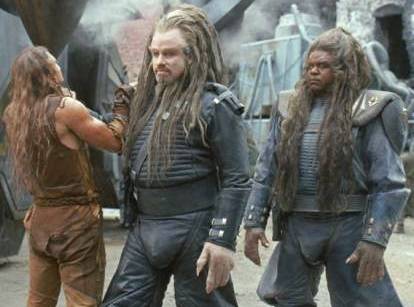
There a lot of ways to do this, of course. Whether it be characters with big ears, big flashy space ships flying through space, or even just flashy new computer consoles, theses small differences help immerse the reader in a story. These are cosmetic differences though, the mere skin of a science-fiction story. The harder part is crafting characters, and keeping their characters alien and yet not so alien that the audience can no longer relate with it. Worf in Star Trek, because his background was being raised by humans, was a character that people could relate with and yet his Klingon side was foreign enough that he made a believable alien.
And even better example would be Christoper (the Prawn) in District 9. In fact District 9 is just an all around good example of an excellent character-driven sci-fi story. The Prawns were completely alien in appearance, one might even describe them as repulsive. I’ll admit I wasn’t impressed with the Prawns in district 9, especially when Wikus tosses them a can of cat food and several Prawns begin fighting over it. What was great about this is that it put you in the same mindset as Wikus, who was basically racist (specie-st?) against Prawns. But as we got to know Christoper and his son, it was slowly that the Prawns are not only a highly intelligent race, but downright sympathetic. In the end…they just wanted to go home.
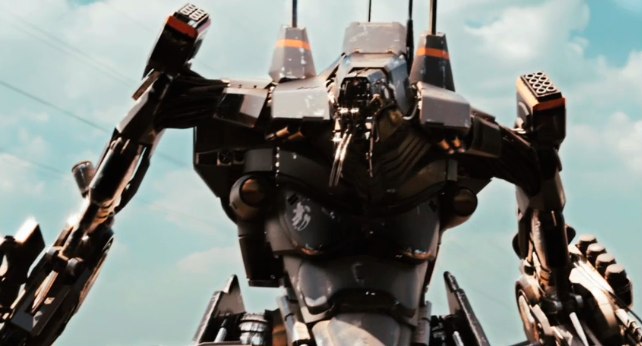
Now District 9 had it a bit easier because they have both audio and visual tools to help reinforce the fact that Christopher is an alien. Obviously I can do this in a story through words, but only to a limited degree, I shouldn’t have to describe my alien characters every time they speak. If I’m having to constantly remind the reader that it is indeed an alien speaking, then clearly I’ve failed in writing my dialogue. That’s why it’s important to create alien sounding dialogue. Which brings to mind one word: Frack.
Oh yes, anyone who has seen Battlestar Galactica will know this word, or perhaps you’ve heard from a particularly annoying friend who started using it when he talked. When the show came out, everyone I knew (I only know geeks, okay?) was using this word in place of…well you know which word I mean.
As much as people on the internet hate to hear Frack now, me being one of them, the fact that it became an overused meme on the internet wasn’t the fault of the writers but rather their overly rambunctious fans. In fact you have to admire the simplicity of their solution to this problem, which in their case was actually two problems. That second problem being, how do we get our characters to swear on basic cable without getting fines up the ass from the FCC?
Frack: Close enough to the more common four letter word people use, and abrasive enough, that people understood the meaning and intent of the word. In addition it gave the dialogue that certain quality of strangeness required in a sci-fi show. Battlestar Galactica made a lot of mistakes when it came to writing the show, but the invention of the word frack wasn’t one of them.
But here’s my problem, my first story has absolutely no human characters whatsoever, so changing a single word wouldn’t be quite enough. However, you start changing things too much and you end up with a story that requires a glossary in order to make sense…in other words, a story no one is going to read. More important than what they’re speaking, however, is how they’re speaking.
Do they curse a lot? Do they address people in formal or casual tones? Are they prone to exaggeration? Do they have their own slang terms?
The answer to all of this is: Frack if I know. Right now I’m playing it by ear and seeing what happens. Hopefully in the coming months I’ll be posting previews from the book when I get the green light from the publisher/creator, and you can tell me whether I’ve succeeded or not.
In the mean time, check back on Friday for my next post about great stories in popular games (that were never explored).



 The Writer's Block
Leave a reply to jmstevenson Cancel reply