Before I begin this week’s blog post, a few updates about the Breaking Bad situation. First of all I’ll be continuing to cover Breaking Bad, but from now on these posts will be password protected so that people who aren’t caught up on the show won’t run into spoilers by accident. I’ve already gone back and password protected the other two posts as well. If you want to read these posts, the password is “spoilers” without quotations marks obviously. The following post, however, has nothing to do with Breaking Bad so every should read on without fear!
The suspension of disbelief is the foundation upon which good stories are built and yet there are a lot of misconceptions about it, the biggest being that the suspension of disbelief relies entirely on the audience. “It’s just a movie/book/game” is the phrase a lot of people trot out when mistakes in the story are pointed out.
Of course the audience does have to play its part. Whenever we turn on a movie, pick up a book or play a video game we’re asking the creators to fool us. To trick us with sweet, sweet lies and take us into another world, or show us our own world from a different point of view. So of course we, as the audience, have to take that first step and accept that we’re being fooled. That doesn’t let the writer off the hook though and, in fact, the audience’s ability to suspend its disbelief relies almost entirely on the writer.
The suspension of disbelief is a magic trick and like any magic trick, its success largely comes down to how much showmanship and theatricality the magician puts into the trick. The writer has to distract, dazzle and misdirect the audience so that the splendid and unbelievable things happening in the story don’t hamper our ability to enjoy it.
There’s a great line from the movie The Prestige that sums up the suspension of disbelief beautifully:
(Huge Spoiler. If you haven’t seen this movie, what the hell is wrong with you? It has Batman vs Wolverine! If you haven’t seen it, there’s a spoiler free quote from the movie below.)
Now you’re looking for the secret [of the magic trick], but you won’t find it…because of course, you’re not really looking. You don’t really want to work it out…you want to be fooled.
A magician works by concealing and misdirecting you from the ordinary, mundane objects that make the trick possible: the wires, pulleys and mirrors. A writer’s magic trick works by plugging or hiding plot holes and drawing the audience’s attention away from the staggering coincidences and unbelievable elements that all stories rely on. So how does this work in practice?
Well the first and easiest part of the magic trick that is the suspension of disbelief is simply properly labeling your story. Aliens showing up in a historical fiction story is a great way to make your reader put down the book, but having aliens show up in a science fiction story is a great way to make the story more interesting. If you’re writing a realistic drama you’re going to have a hard time getting away with the larger-than-life action scenes where the hero takes out an entire terrorist cell, but if you’re writing about Jack Bauer or anything with Bruce Willis in it then your audience would be disappointed if they didn’t get an absurd fight scene. Our willingness to ignore or overlook plot holes and improbable coincidences depends largely on the genre the story falls into.
For instance, the most famous plot hole you probably all know is the “Eagle Flight” from Lord of the Rings: why did Frodo and Sam go through all the trouble of walking when they could have flown instead?
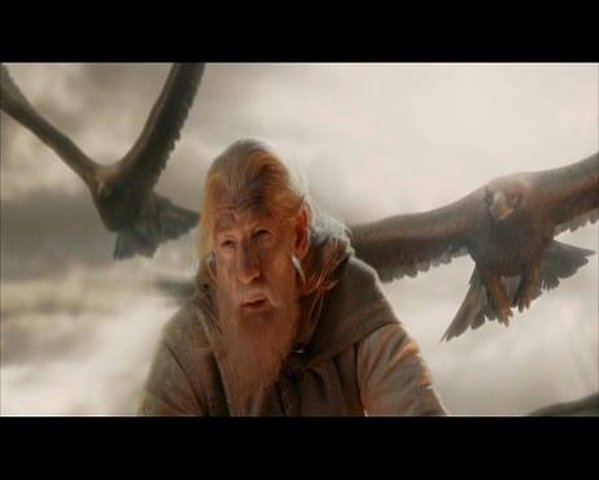
Despite this being a rather large plot hole, most people are okay with it because it’s a fantasy story. We’re already in a story where a giant disembodied eyeball is conquering a world containing elves, dwarves and hobbits so not riding the giant eagles into Mordor to end the story in five minutes doesn’t really ruffle our feathers (I’m so sorry) which leads us to step 2 of the trick: don’t point out your mistakes to the reader.
Do you want to know the reason why Tolkien never went into why they couldn’t just fly into Mordor? Because doing so would draw your attention to the fact that they could even do that, he ignored it for the same reason a magician doesn’t tell the audience why the levitating woman isn’t held up by wires: you don’t want the audience looking for the wires. The moment you tell them to look for the secret to the trick you’re reminding them that they’re watching a trick, and that sense of magical wonder is lost. The sad fact of the matter is that plot holes happen, there’s no writer so talented as to make a completely airtight world free of holes, but when a writer comes across a plot hole that can’t be fixed then its up to him to redirect the audience’s attention elsewhere.
Now imagine for a moment that Tolkien did decide to try and tackle this plot hole in the book. What kind of excuse should he use and what excuse would the reader accept? Eagles don’t like the warmth of volcanoes? Sauron emits an Anti-Eagle field around his domain? The Naz’gul patrol the area constantly even though they should be looking for the ring? No matter what excuse he made, it would seem flimsy to us because suddenly we’d realize “yeah, flying the ring to Mount Doom would be a lot easier.” He would have shown us the wires; he would have ruined the trick for us. So instead of telling us why the Eagles couldn’t fly to Mordor, he instead spent his time redirecting our attention to other things: Frodo and Sam’s survival, Gondor’s stand against the hordes of Mordor, and the final heroic fight at the Black Gate. Using high tension and emotional involvement in the characters it the best way to keep the audience from noticing a plot hole because we’ll be much more invested in a character than a plot.

The Dark Knight Rises for instance featured a lot of rather inexcusable plot holes and unexplained elements, and yet it’s fucking Batman and we would have been willing to excuse any or all of them if they’d put more effort into redirecting our attention. I’m currently working on an article covering Christopher Nolan’s Batman trilogy, but let me just pick on one prime example: Bane’s discovery of Batman’s secret arsenal.
This is a major story point in the movie because it’s Batman’s arsenal that gives Bane the ability to take over the city, but how Bane located it is never explained and then instead of trying to distract us from this gaping plot hole they just keep going like they hoped we wouldn’t notice. Honestly only a few lines of dialogue were needed here, just a little extra effort that would let me go on fooling myself into accepting this extremely convenient discovery and if they’d really wanted to go all out they would have simply dragged that whiny little accountant from The Dark Knight on screen to explain how Bane found out. Apparently Rises was too busy with time-compressing montages and miraculous punch cures for broken backs to bother trying to disguise its mistakes.

The rest of the magic trick can’t be easily described unfortunately because it all comes down to the skill of the writer. Keeping a consistent tone, remaining true to the themes of your story, and making interesting characters are crucially important in making sure the audience can suspend its disbelief. If any one of those elements fail, then so does the trick.
The reason we accept Arya just happening to rescue a shapeshifting assassin but scoff at Jeff Goldblum hacking an alien mothership with his 1996 laptop all comes down to the writer’s talent and ability to keep us distracted. They’re both equally absurd if you think about it, but because Arya is such an amazing character and A Song of Ice and Fire is so well written the staggering coincidences don’t seem all that strange.
All of this said though, this doesn’t lets you off the hook because in the end its still your disbelief that you need to suspend. No writer is so good as to completely fool you into believing everything they write, so you need to meet us halfway. You have to be willing to let yourself be fooled, because otherwise you’re just that one asshole in the theater that came to the magic show just to yell out “It’s a trick!”
Yes, we know its a trick. That’s why we came. The real question is, why did you?



 The Writer's Block
Leave a reply to Andreas Lang Cancel reply