
Life is Strange is an amazing story that I recently got to experience thanks to the generosity of one of my readers, Martin, who gifted me the game on Steam. The only catch? To do a review of it.
Which wasn’t much a catch, because Life is Strange is an amazing story filled with memorable characters and a unique time traveling mechanic that requires you to think outside the box to solve most of the puzzles. It’s also a game that explores important themes and shows you that life is a strange journey for all us, and sometimes we all need a little help to get through it.
Life is Strange:
A Storytelling Review
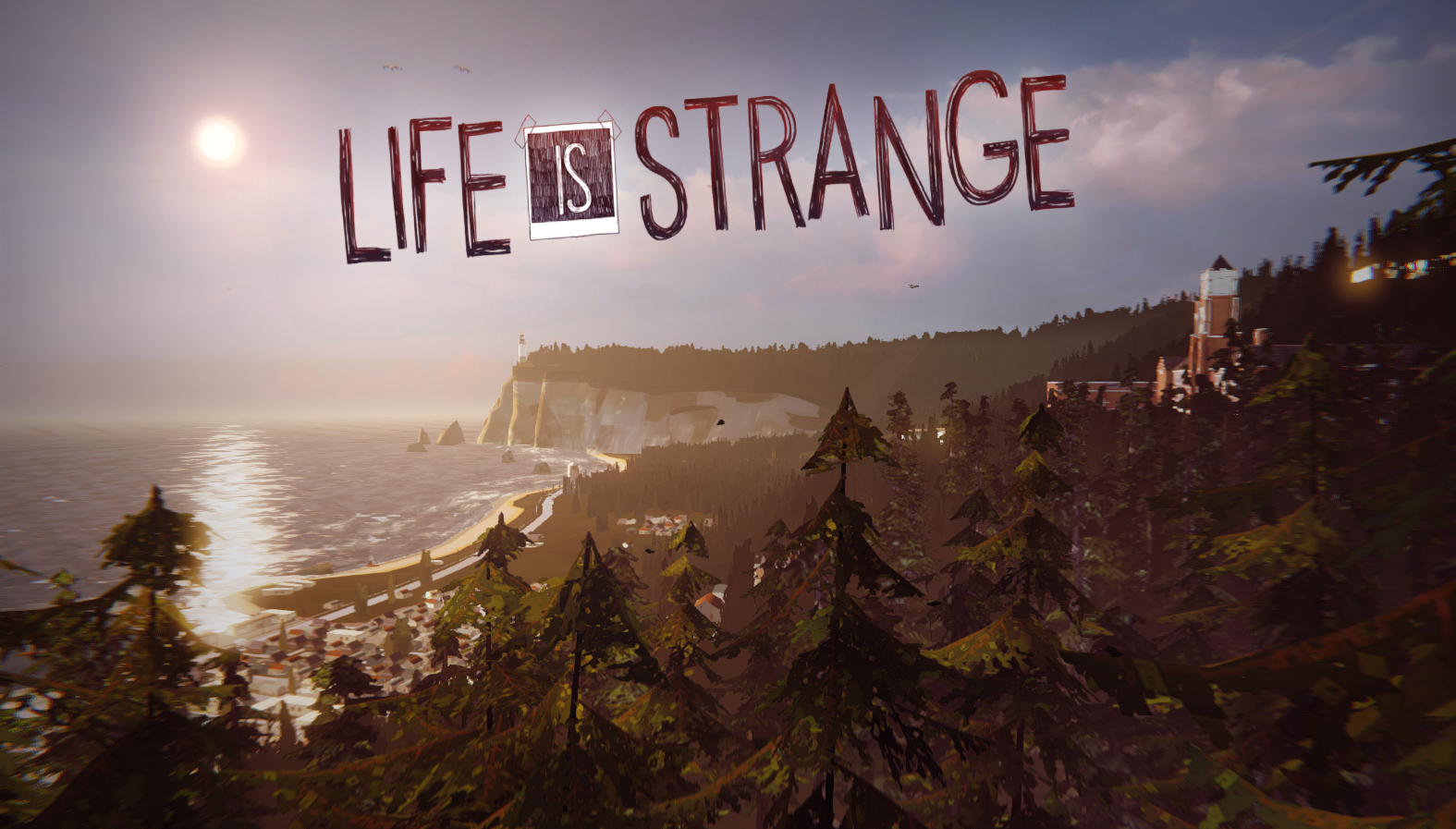
Life is Strange is the story Max Caulfield as she returns to her hometown of Arcadia Bay, Oregon to attend the prestigious Blackwell Academy. It’s a game that fills its cast with typical trope characters: the bitchy popular girls, the fat loner, the crazy rich kid, and every other character you can think of. It’s beginning is a giant cliche as Max walks down a long hallway filled with students while monologuing about her life to an admittedly great song.
It lures you into making assumptions about characters and let’s you think you know where this story is heading… and then completely challenges all your expectations and turns the tropes on their head. In most adventure games, you have to explore your environment to find the solutions to the puzzles. In Life is Strange you have to explore the characters around you, talk to them, in order to find many of the solutions. It’s a game that rewards you for interacting with its NPCs, something more games need to do. And most importantly, it’s a story that makes you examine yourself just as much as the characters you meet.
I fell in love with this game less than twenty minutes in when we’re introduced to the Blackwell’s groundskeeper, Samuel. Max’s internal monologue states right up front that people find him creepy, and Max tells us that he isn’t stalker creepy, but more X-Files creepy.
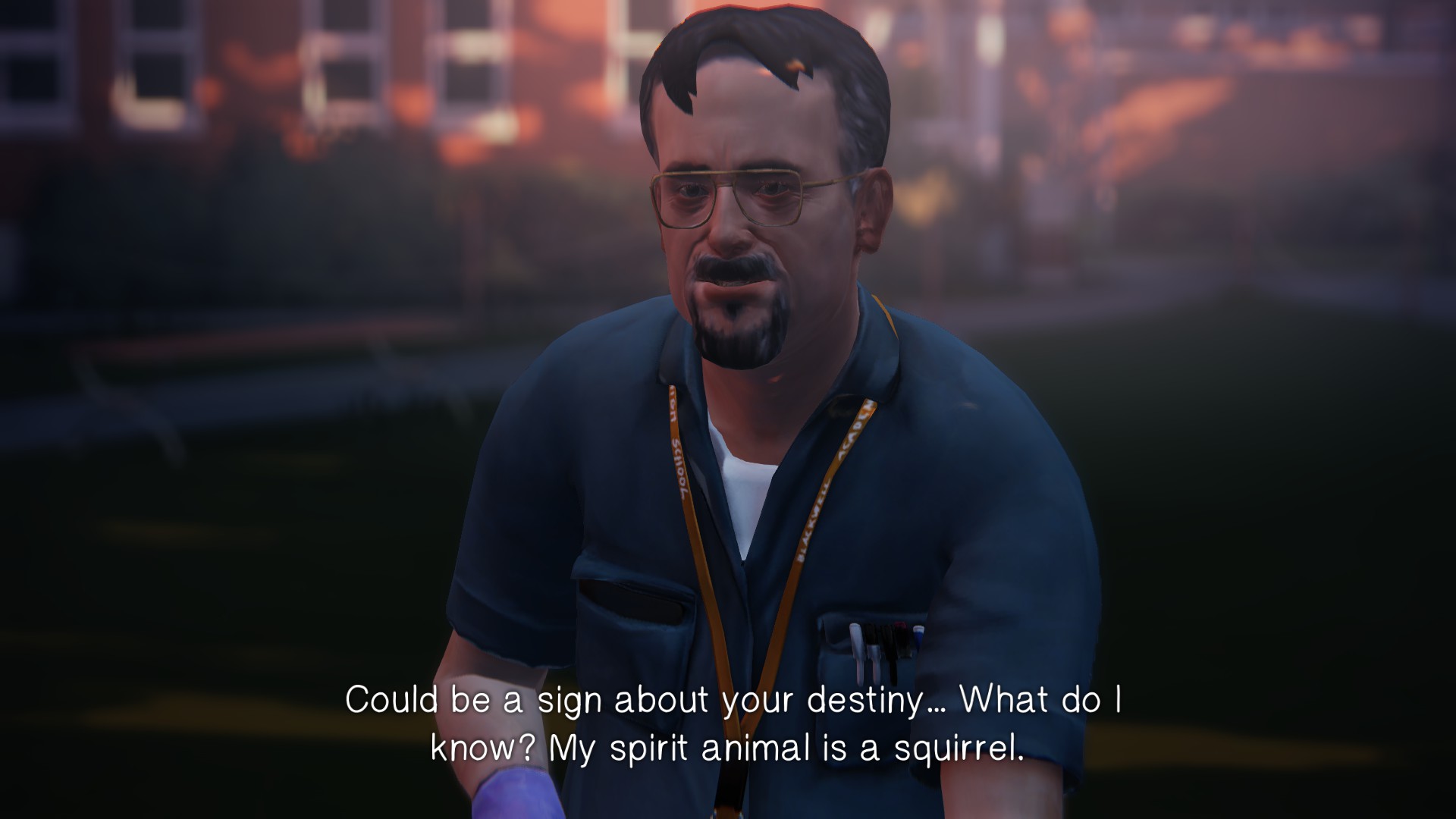
Yet despite Max’s reassurances, as soon as Samuel spoke I said to myself, “oh yeah, he’s creepy as fuck.” And I hate that that was my gut reaction to him, because it says something horrible about me. It says I’m willing to judge a person based on his appearance and voice, and I don’t like that one bit. I think of myself as a tolerant and nonjudgmental person, but when confronted with someone who doesn’t conform to societal norms… I acted like a total Trump. The groundskeeper ends up being one the kindest and quite possibly wisest character in the game.
That’s when I fell in love with this game, because I think the best stories are the ones that make us look at ourselves and consider how we might act. Games have the unique advantage of actually putting us into those situations and seeing how we act. Life is Strange held a mirror up and I didn’t like what I saw in the reflection, and it made me want to change that about myself. So now when I meet someone in real life that acts or sounds like Samuel, I hope I remember the monster I saw in that reflection and treat them like Max treats Samuel; with dignity and kindness.
Which is really the theme and message of the entire game; treat everyone you meet with dignity, respect, and with the understanding that they’re all facing struggles of their own.
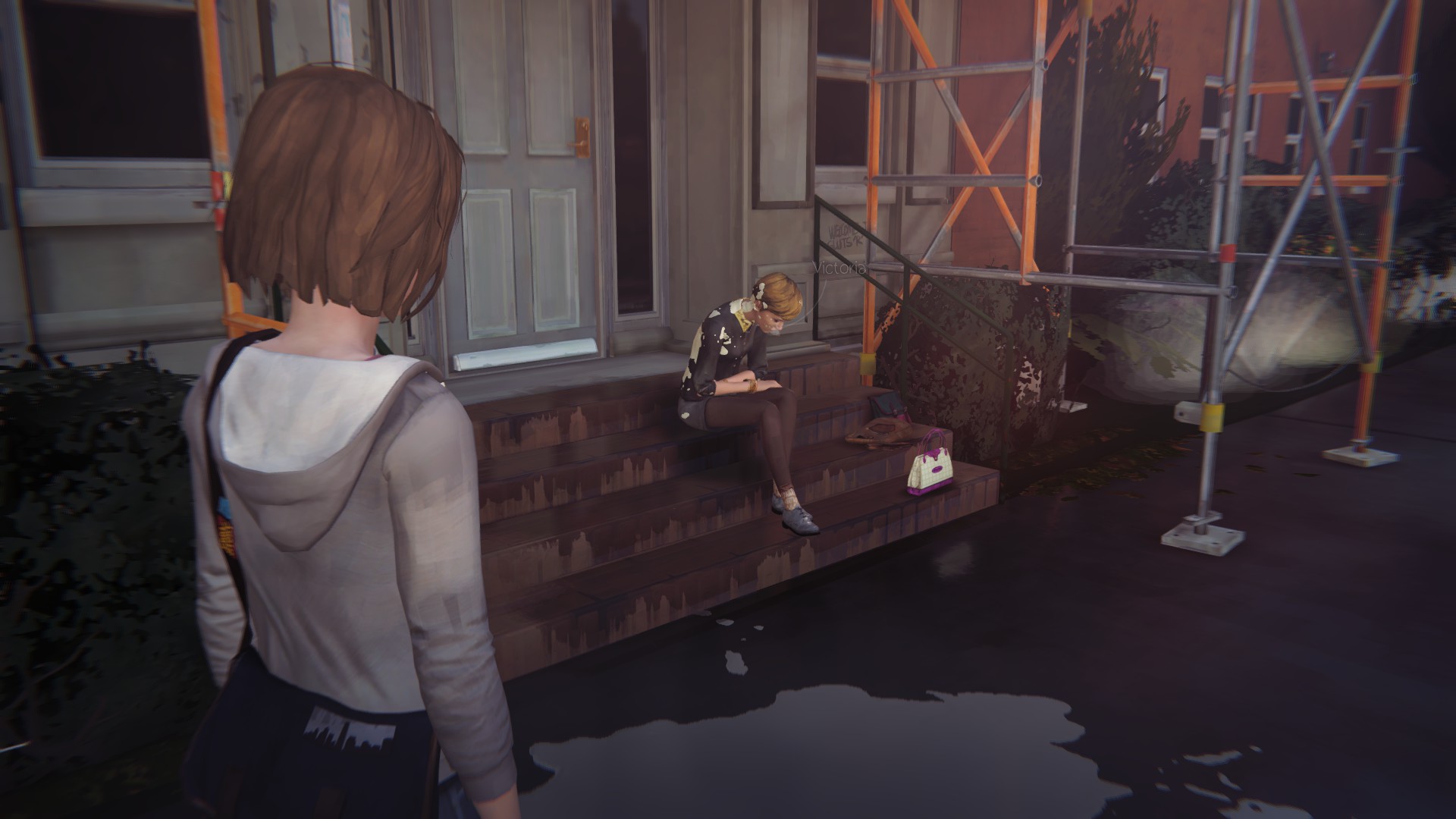
One of the most shocking moments in the game comes when a viral video of Kate Marsh hits the internet. Kate is one of Max’s classmates, and she’s incredibly sweet. She’s a shy girl that keeps to herself, to an even greater extent than Max, and she’s very religious. As a shy person in school myself, I can attest to the fact that often times shyness is taken for arrogance. People assume you don’t hang out with them because you think you’re better than them, when in fact you don’t hang out with them because you’re afraid they don’t want you to. Combined with the fact that Kate is very religious and the rest of the students at Blackwell assume she’s an arrogant, holier-than-thou stuck up bitch.
So when a viral video pops up of Kate making out with several boys at a party, everyone is quick to pile onto the poor girl. Because now they can label Kate a hypocrite, and there’s no worse kind of bullying then self-righteous bullying. People wrote horrible messages on her dorm room panel [Will Fuck 4 Jesus being one that stuck out in my mind as being thoroughly disgusting] and posted links to the viral video everywhere they could. As Max, I did my best to erase these disgusting remarks and links, and helped Kate when I could.
But no… that’s not entirely true. One morning things were clearly coming to a head for poor Kate, she ran crying out of Mark Jefferson’s class after he refused to help her and she was keeping to herself far more than usual. Earlier that day using my time bending powers, I’d explored her room and seen terrible messages from her family about how she had disgraced them and shamed herself. I knew she was in pain, I knew she needed help.
But I was with Chloe at the time, playing with my time powers.
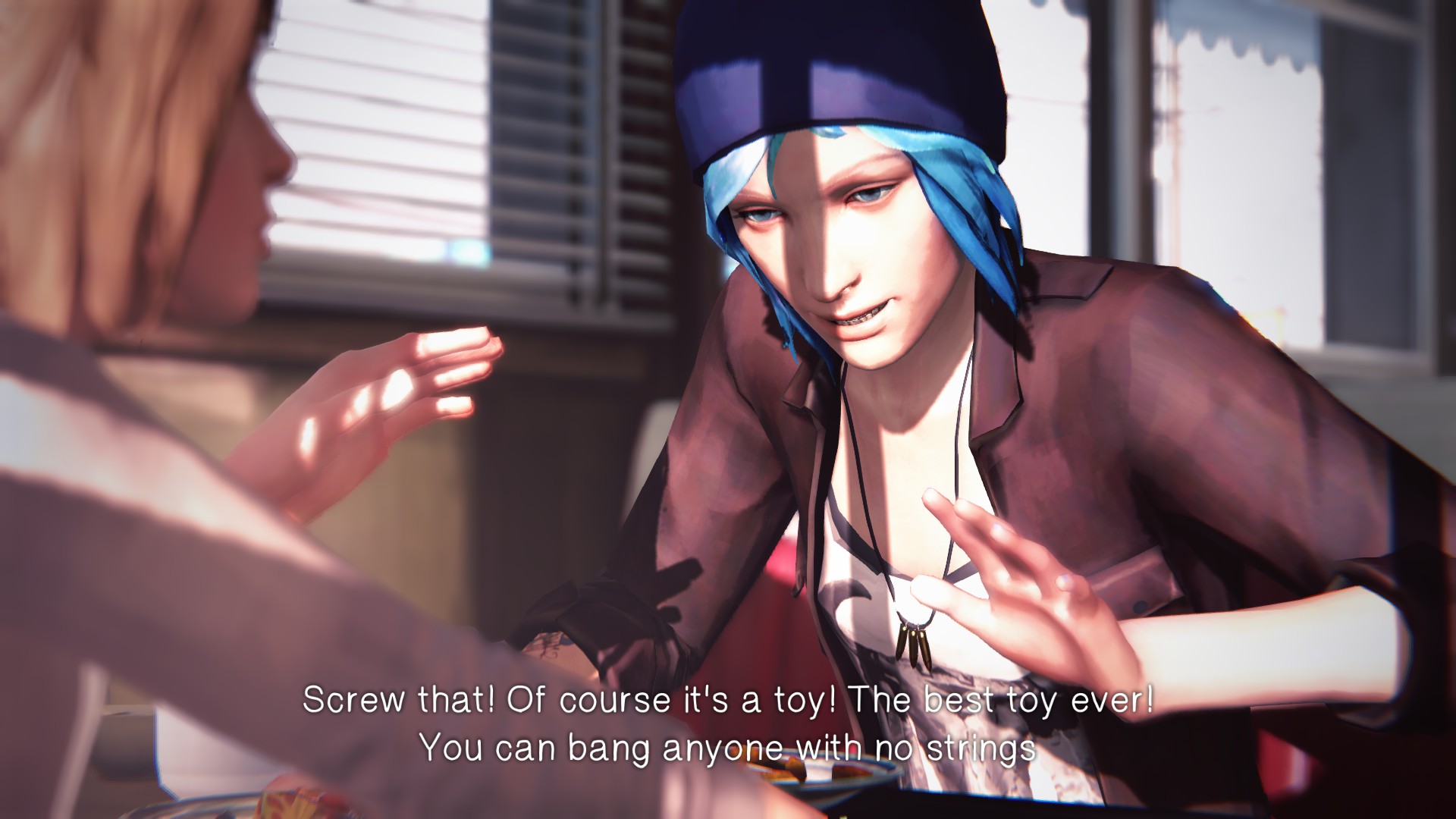
So when Kate called while I was with Chloe, I chose to ignore it. After all, it’s a video game, what’s the worse that can happen?
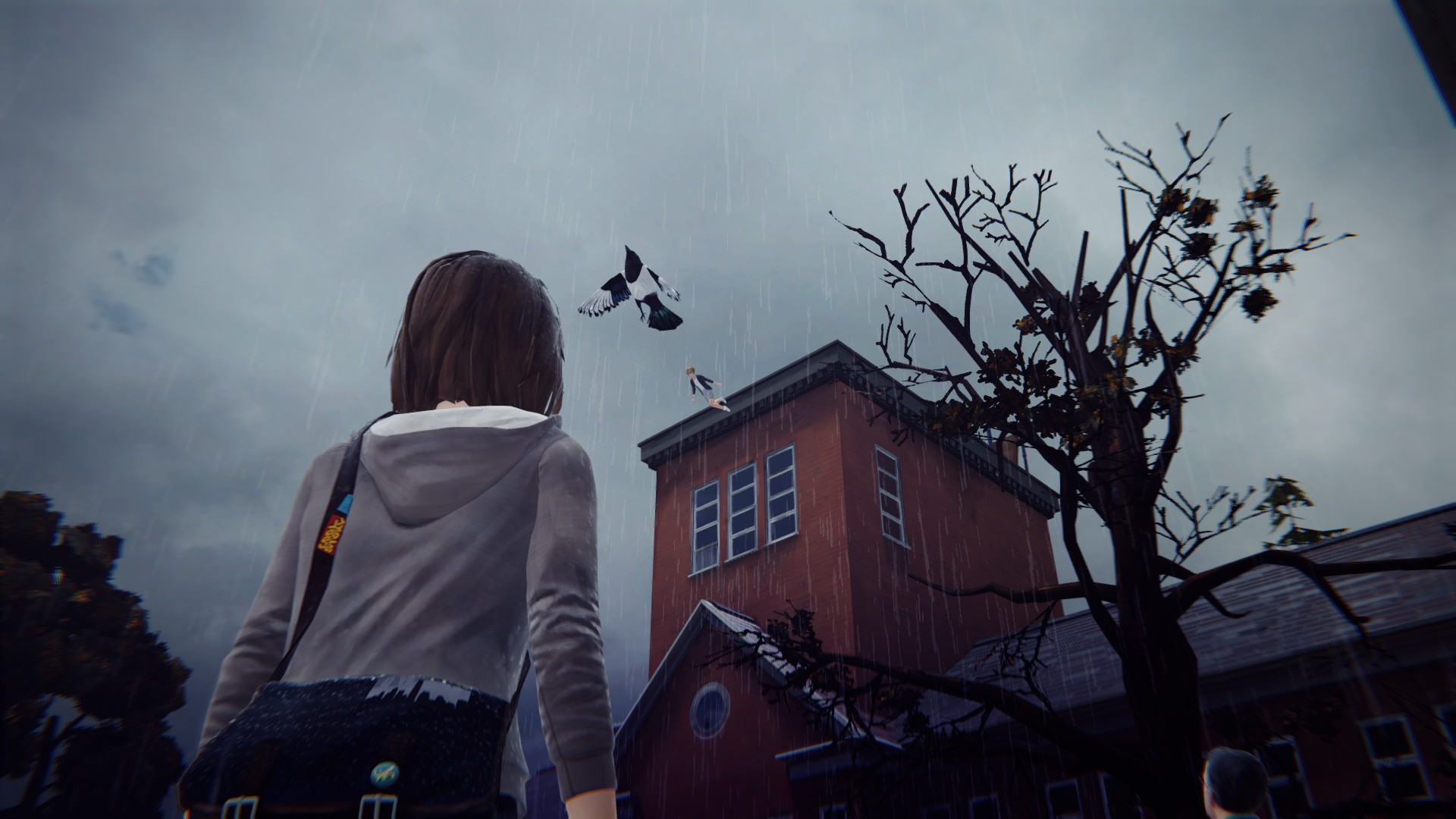
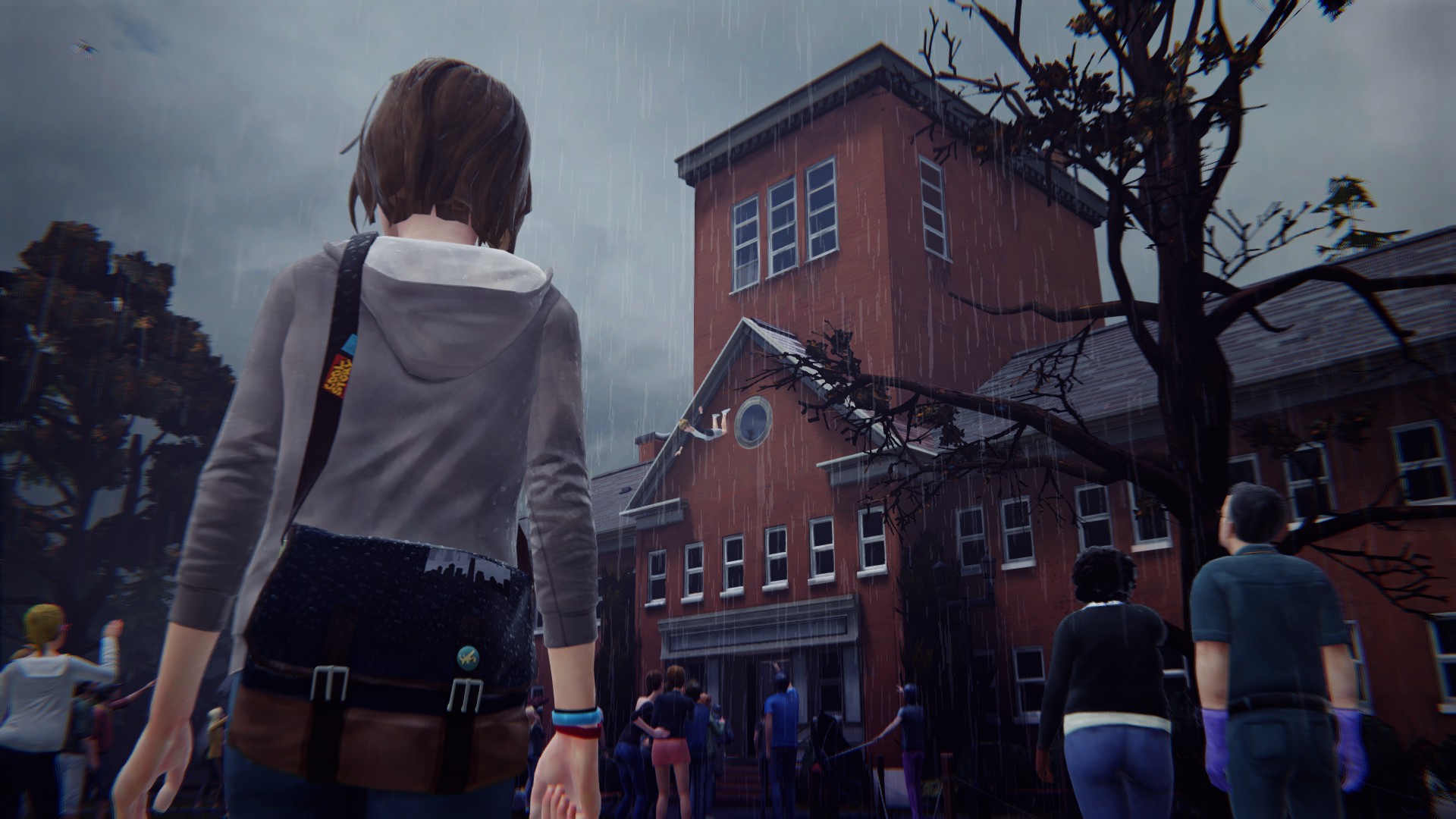

This is one of the most powerful scenes in the game and an unfortunately accurate portrayal of what leads people to suicide. When Max sees Kate leap off the roof, her sudden burst of emotions freezes time its tracks, giving her enough time to reach the roof and try to talk Kate down.
I tried to reach her, I really did. Unfortunately I tend to get tunnel vision playing through a good game and rush towards resolving the main plot, skipping a lot of the optional stuff so I honestly didn’t know Kate very well when I tried talking her off that ledge. And because of that, I ended up metaphorically pushing her off that ledge. Kate felt utterly alone and because I didn’t know her well enough, I couldn’t provide the human connection she desperately needed.
And she jumped.
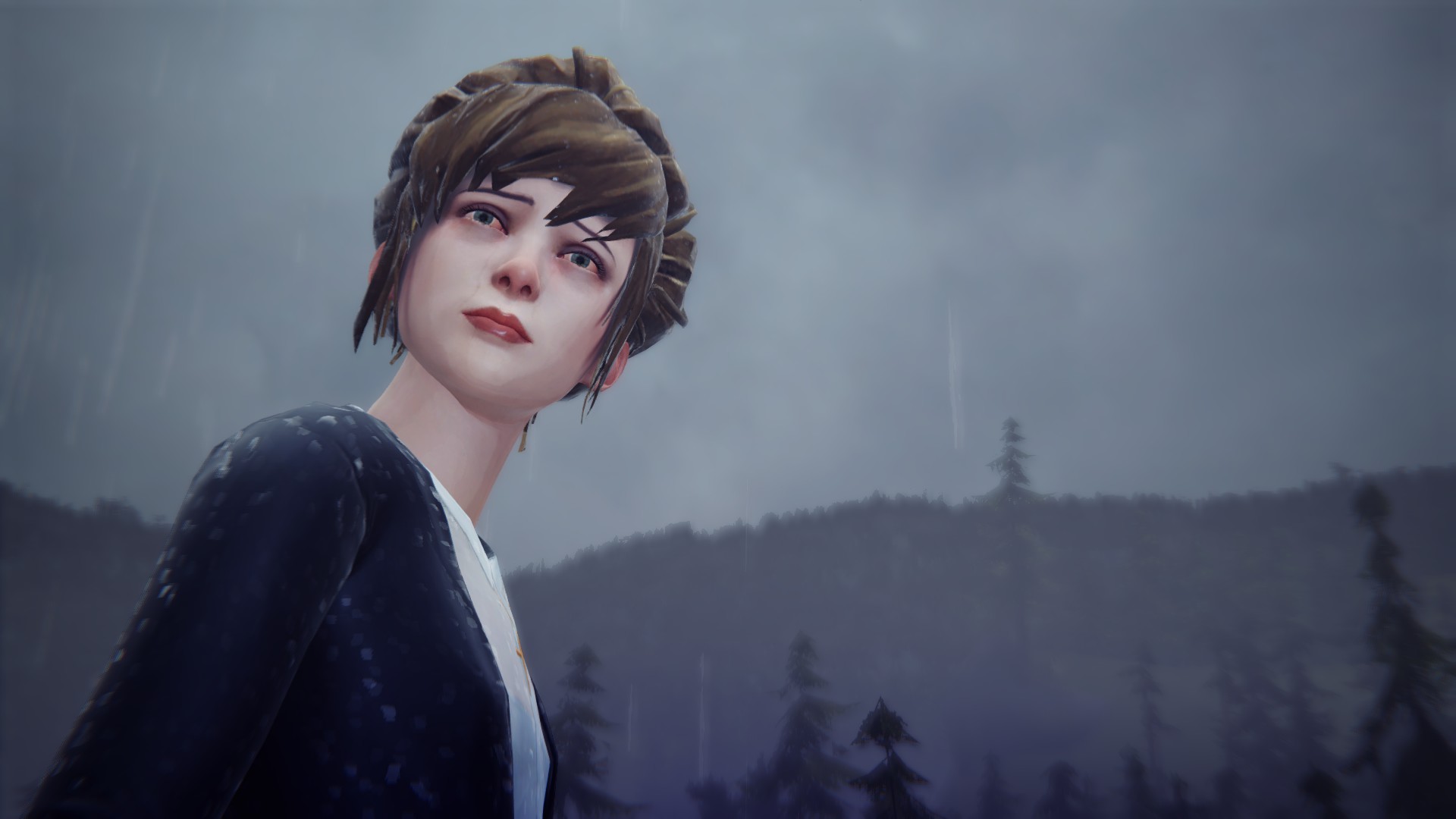
What I absolutely love about this game is that it’s entirely possible to save Kate, and you don’t have to find some secret McGuffin or complete some sidequest to do it. All you have to do is invest a little time into talking with Kate and get to know her, so that when you are on the roof with her, you can show her she’s not alone. Having metaphorically been on that roof a few times in my life, I know that the most important thing in those moments is knowing someone out there cares.
And if you do manage to save Kate you meet her at the hospital, where she’s already feeling much better. Because suicide is always a spontaneous decision (with the exception of end-of-life euthanasia that is) and the reality is, the desire to die never lasts very long. It’s one of the most sensitive and accurate portrayals of suicide I’ve ever seen, and the first one I’ve seen in a video game (at least the first one that didn’t involve a zombie bite.) The game is worth it just for this sequence alone.
I found myself so invested in the characters and their relationships, I actually found the mystery plot surrounding it to be almost dull by comparison. The mystery revolves around the disappearance of Rachel Amber and the Vortex Club, where girls are getting drugged and abused (including poor Kate, which leads to the viral video). Max is also haunted by visions of a massive tornado destroying the entire town of Arcadia Bay. Honestly I think the game should have spent just a little more time on these plots, because they feel almost like afterthoughts compared to experiencing the interpersonal relationships between the characters.
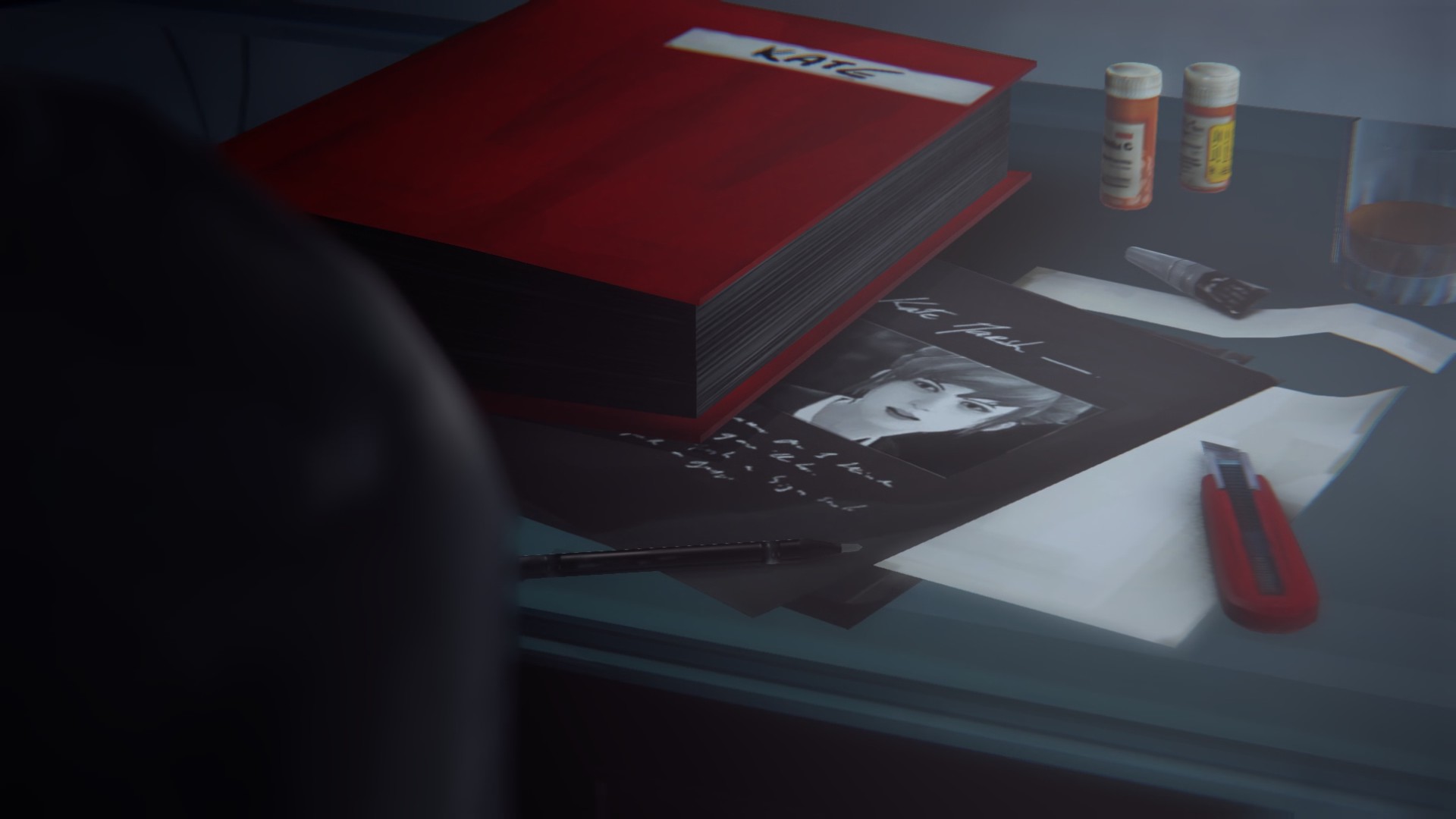
The big reveal at the end of the mystery is that Mark Jefferson, the famous photographer turned teacher, the reason Max came to Blackwell, is actually the serial killer she’s been hunting. This was a brilliant twist because it makes complete sense in hindsight. Mark Jefferson’s creepy fixation with Max’s entering his contest, the weird photographs he was famous for that were plastered across the campus, and even his personalty: his Ted Bundy like charm designed to make someone lower their guard.
Max manages to stop Mark Jefferson, but only by doing multiple warps through time and space, and by the end time itself begins to unravel. The huge tornado that Max had seen tearing through Arcadia Bay is the result of Max’s continuing use of her powers. Leading to one tragic, but ultimately inevitable decision.
Max has to return to the moment it all started… and let Chloe die, rather than change history.

Or you can choose to sacrifice Arcadia Bay and kill thousands, get a 30 second clip of Chloe and Max driving through town, and roll credits. I honestly have no idea why this ending is in the game, clearly the team didn’t like it since they put no effort into making it emotionally fulfilling or offering any sense of closure. Maybe this was a decision by some soulless corporate suit that wanted to appeal to a wider audience or something, I don’t know. The fact this crappy ending is in the game is almost insulting, and tarnishes an otherwise shining jewel of storytelling.
The confusing thing about Life is Strange‘s two endings is that it really didn’t need it. I hold up the first season of Telltale’s The Walking Dead as one of the finest storytelling experiences in gaming, and it didn’t need two endings. Instead Life is Strange should have done something similar to the Walking Dead: offer a single ending but with two small but still incredibly emotional choices. The Walking Dead let you choose to let Lee turn into a zombie or have Clementine mercy kill him. Life is Strange should have had the same kind of choice, and I’m honestly surprised they didn’t offer it. It should have offered us the choice of sacrificing Chloe, which they gave us…
Or sacrificing Max.
I was expecting this option to appear and was rather shocked when it didn’t. Nathan was already so keyed up that all Max would really have to do is jump out from behind her cover and scream at him, and he would have shot her on instinct. Yes she would be changing the timeline one last time, but Max would also die, and with her, the power that was destroying time.
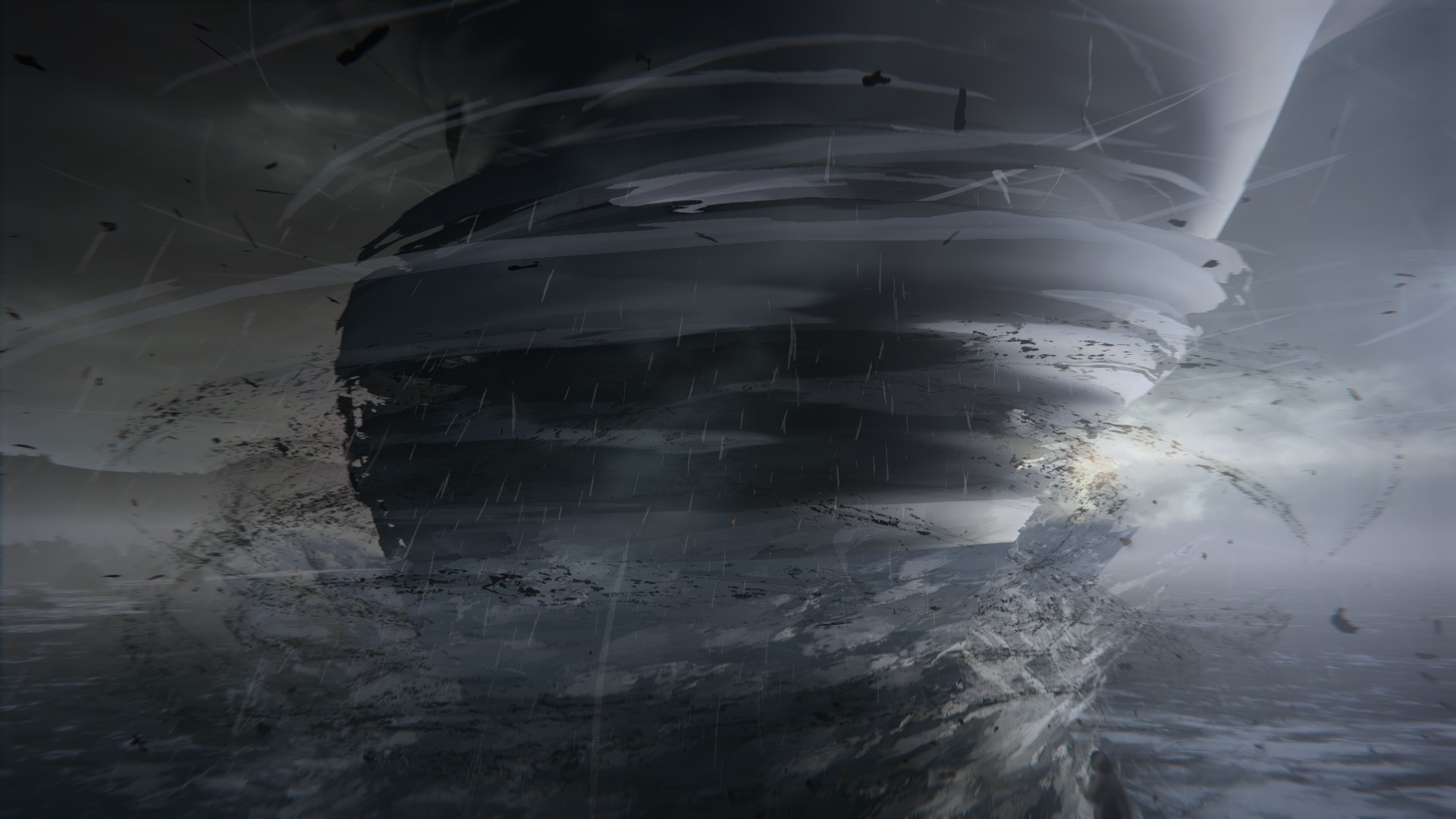
Honestly I think sacrificing Max would have been the more tragic and emotional ending. Not to mention making more sense. After all I don’t think trying to save Chloe was the reason time began unraveling and created a huge tornado. It was Max’s continuing use of her powers and ripping time a new space-hole in the process. And while Chloe was indirectly the cause by forcing Max to continue saving her, Max is the real problem. Even with Chloe dead now, how long until Max uses her power again?
At several points in the storyline, Max uses her power instinctually to protect herself or others. What’s preventing that from happening again?
Still all that said, as long as you pick Sacrifice Chloe as your ending, the final act of Life is Strange is still emotionally satisfying. Would I have preferred something a bit less conventional and less of carbon copy of The Butterfly Effect? Of course. An ending that challenged my expectations just as much as the early chapters did would have made Life is Strange a narrative on par with the Telltale’s The Walking Dead, but as it is, it falls short.
Yet I have to admit that the final scenes of Life is Strange hit all the right emotional notes and provided closure to the series, which is all I really look for from an ending.
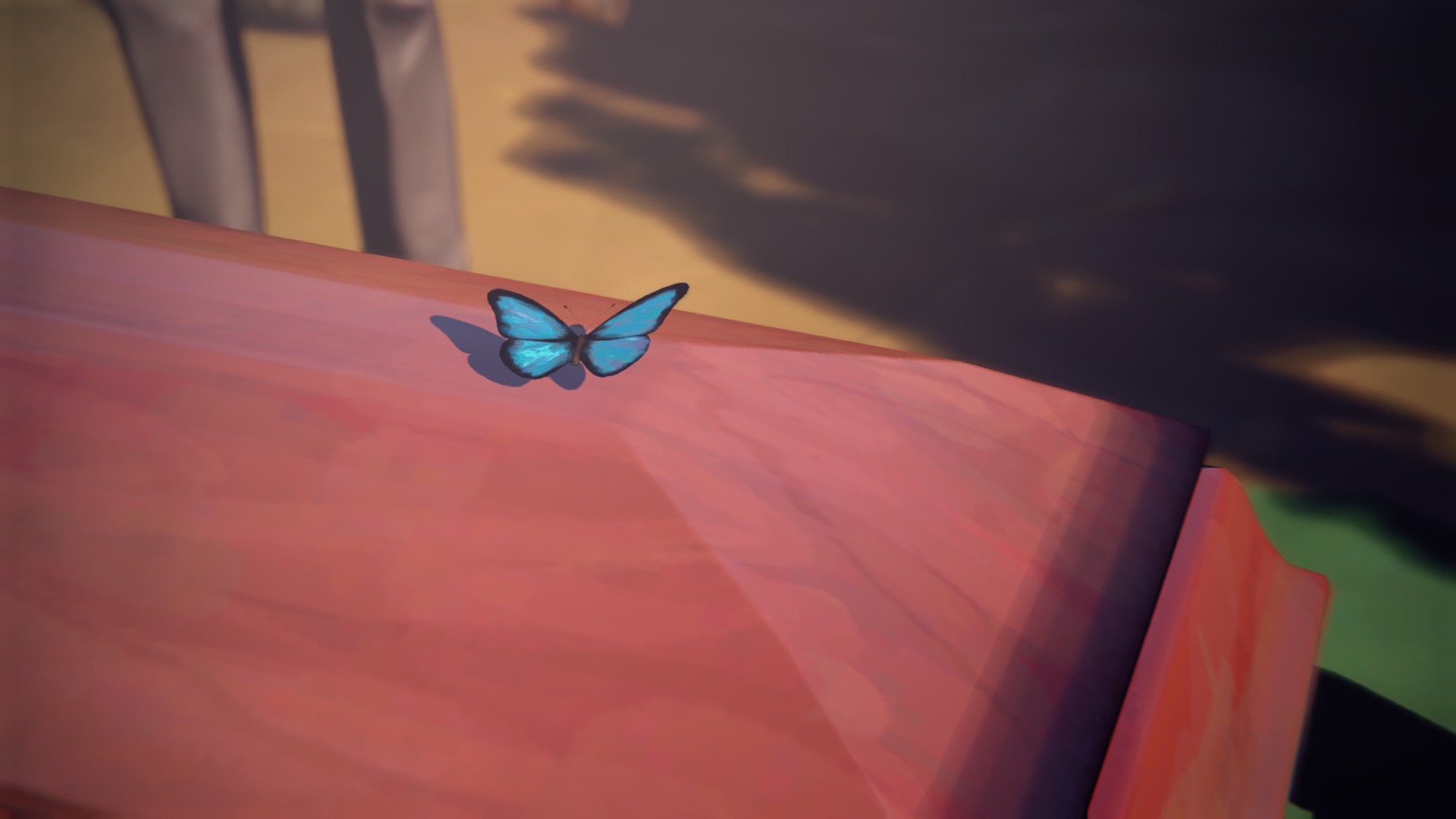
The ending isn’t what I would have liked to see, but Life is Strange is still an amazing game filled with memorable characters and a great message we should all take to heart:
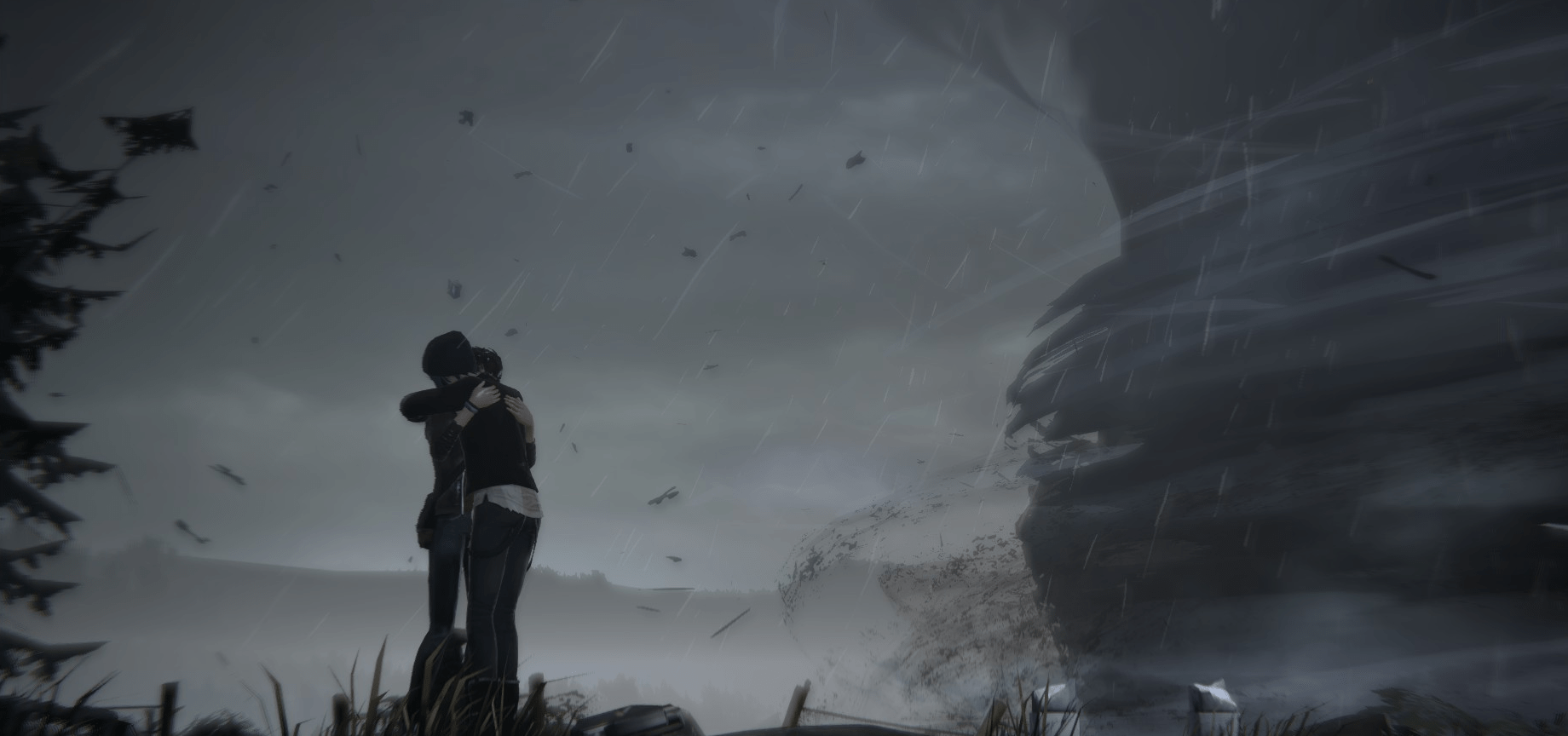
Life is a strange journey for all of us and we should all try to help each other through it as best we can. Because one day we’ll all find ourselves staring out into an unstoppable storm and when we do, we should have someone at our side…



 The Writer's Block
Leave a reply to elissalynch Cancel reply