It’s been four years since I posted here. In retrospect I should have written a goodbye to all my faithful readers, but it was not an intentional choice. I always meant to get back here and write a new article, but things kept coming up.
Shortly after my last article in 2022, I was approached to write a screenplay for a short film and then almost immediately after began writing for an indie video game project. Unfortunately neither project reached production but it still spurned me onto to start working on my own creative works. Then the deep depression came, lifted out of it only by meeting my now ex-girlfriend and was then focused on building my life with her.
There’s also been a shift in my thinking, a deep desire to write my own stories and not just talk about others. This blog will likely never be as active as it once was and its nature will now shift. I’ll use this platform as an opportunity to publish my own stories, drafts of chapters from my novel, and posts about my life as I rebuild it.
That’s not to say I’ll never do a review again, because guess what we have today!
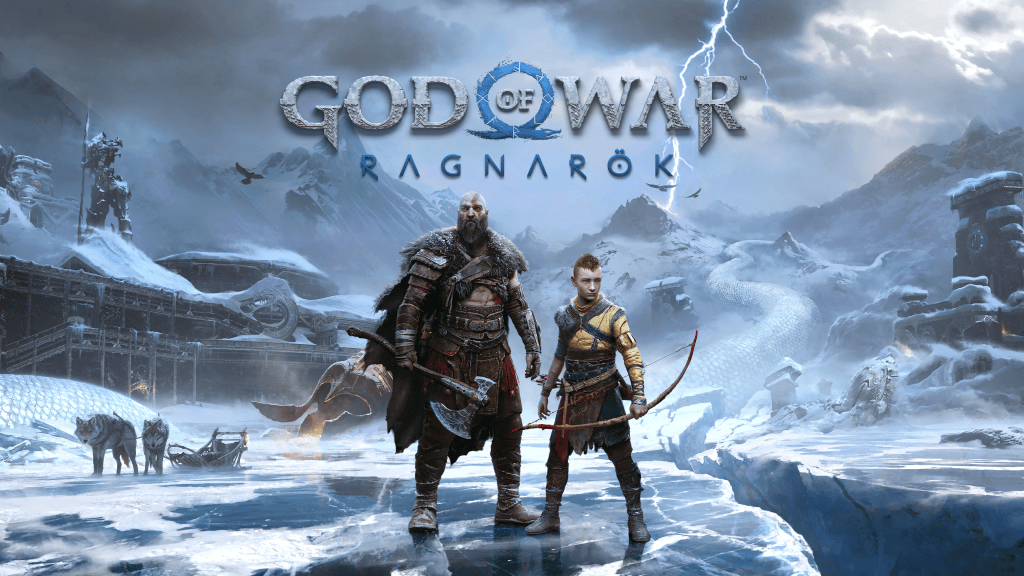
I’ve experienced many a wonderous and moving story over those four years. And today I want to share with you one of my favorites: God of War. Not the early 2000s titles, though goodness knows I played the crap out of those, but instead the series that came out 2018, and specifically Ragnarök.
This will come in two parts: today I’ll be analyzing the writing of the game and why it works so well. Next week in part 2, I’ll talk about the emotions this game so beautifully evoked. And of course, there will be overlap between the two, so I hope to avoid being repetitive.
But if I am, well, you signed up for this ride. Satisfaction is not guaranteed.
God of War: Ragnarök
Part One: The Writing
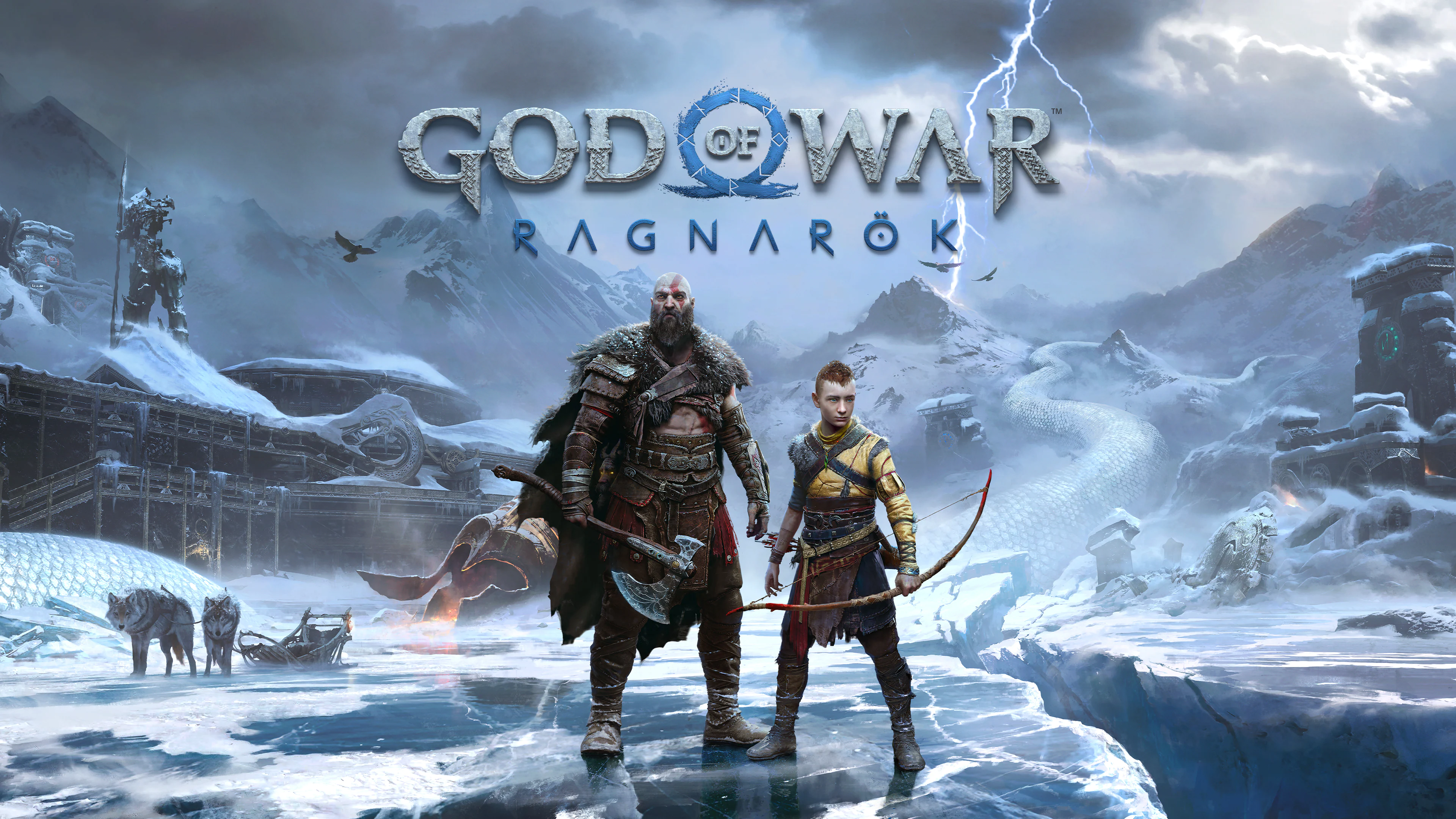
Beautiful writing like this is like watching a professional dancer on stage: it leaves me so mesmerized I can’t appreciate the artistry of the techniques being used to create the experience. So I’m glad that my relationship with my ex afforded me the opportunity to replay this game, because it was only on a second viewing that the brilliance of this game was truly experienced.
The Plot
As longtime readers will know, I’ve not been shy about my opinion that character-driven stories are better than plot-driven ones. To me the plot is the stage upon which the characters act and I’d never make the set the story. Yet plot is still a critical a component of good writing. The best kinds of plots are the ones that provide structure and compliment the characters’ journeys without getting in their way.
God of War: Ragnarök has just such a plot. In fact it tells you everything you need to know right in the title. This is a plot about the end of the world, a cataclysm that will destroy the nine-realms, and whether Atreus will be the harbinger of its doom or its savior. As I’ve talked about before, the threat of using a high stakes story like preventing the end of the world is that it can sometimes take over the entire narrative. Star Trek: Discovery and Horizon: Forbidden West both fell into this trap.
Ragnarök does not for one very important reason: the plot is reactive to the characters.
The two examples I cited do the opposite. Michael Burnham needs to respond to the appearance of the Red Angel and its potential threat to the galaxy, and Aloy needs to stop the Zenith’s from wiping out the planet. Plot devices continue to throw up obstacles or deliver reverses to the characters that forces them to respond to it.

The plot of Ragnarök began in 2018’s God of War by the actions of Kratos and Atreus that led to the death of Baldur. Already the plot has reacted to the characters and I would have been content to leave it there, but the writers took it even further. When Odin and Thor arrive, they are not just reacting to the death of Baldur, but something that Atreus has been doing: attempting to find Tyr.
This whole beginning section is brilliant in that in the course of a few moments we’re delivered everything we need to know about the characters and plot. Atreus wants to find Tyr to help them fight Odin, Odin wants something from Atreus, and the goal of the game is not to prevent Ragnarök, but to cause it. This last part surprised me, a much different take than I had expected. And one most welcome.
Every step of the way the plot reacts to what Atreus is doing. He seeks out Tyr and finds him (or not as the case ultimately was), he rebels against his father and seeks out Odin, and he releases Fenrir upon the world allowing them to invade Asgard. The plot reacts in kind; By finding Tyr, Atreus has unwittingly walked into Odin’s trap; Seeking out Odin triggers the threat of Heimdall; And Fenrir tears open the underworld and spills the undead into the land. Atreus makes dozens of choices in this game, some big, some small, but all of them pushing the plot forward.
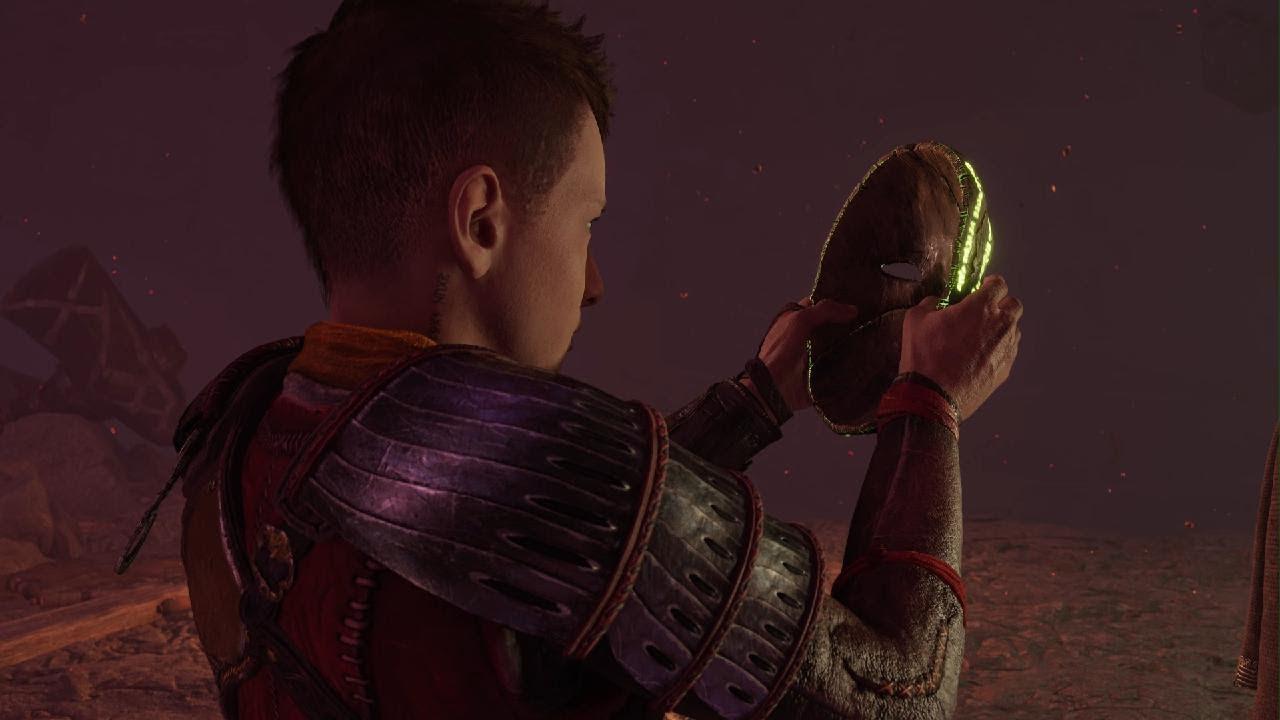
And most interestingly, the plot works at odds with Kratos. Every step of the way he attempts to stop his son from choosing the path leading to war. And in this way the plot performs its greatest service by providing the friction that will create one of the best character dramas in video game history.
The Characters
I’m an ardent believer in Hemingway’s Iceberg Theory, in which most of the true meaning of a story should remain subtext and not explicitly stated by the writing. Every character in this game is an iceberg. You see just small parts of their characters, but can feel the depth of them. Each of these characters could be a blog post of their own. But for now I want to focus on Thor.
I saw myself more in Thor than any other character. I’ll dive into that more in part two, but it was this connection between us that led me to study his character development. And that development began immediately with such a tiny detail:
A cup of mead.
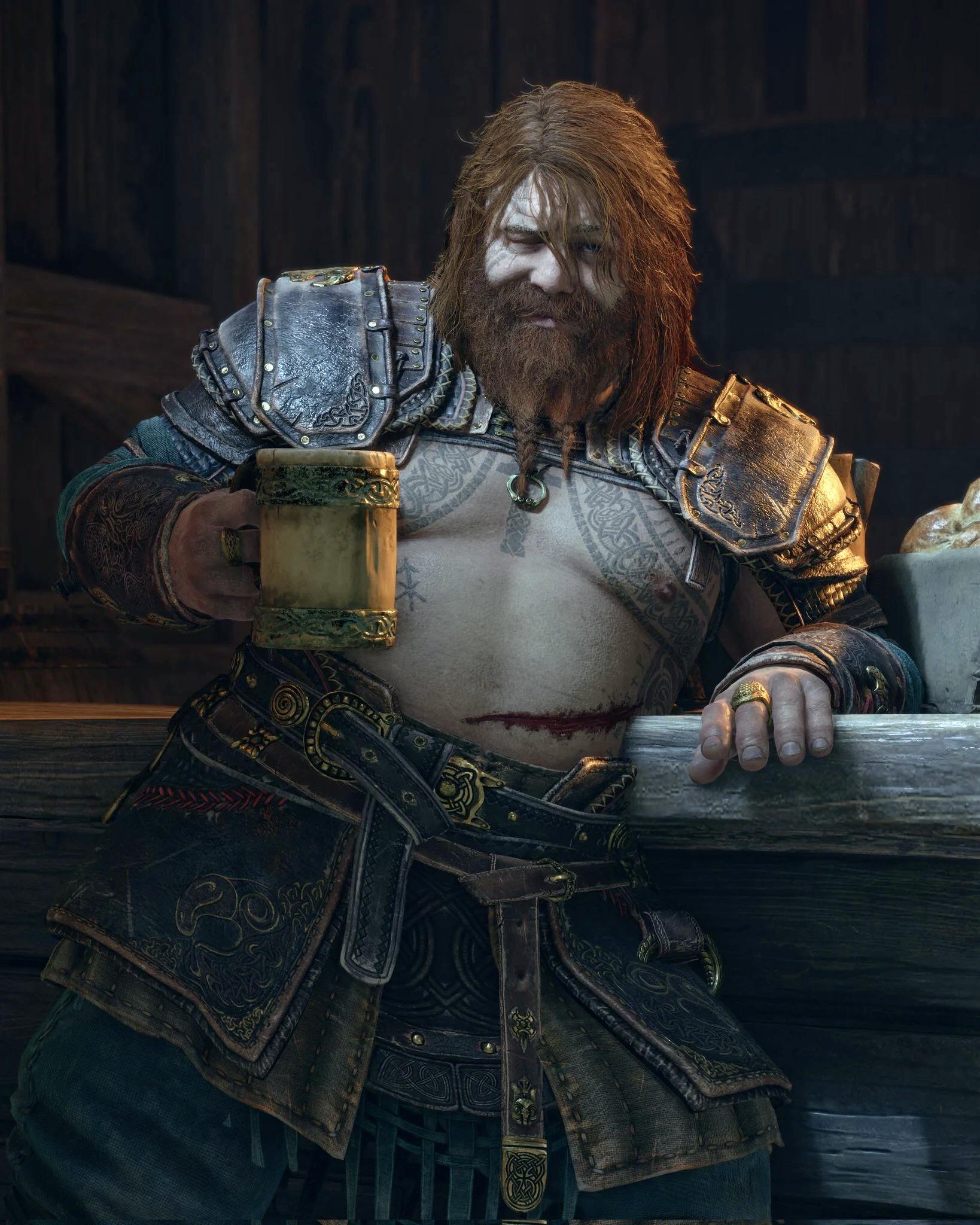
That opening scene is filled with such detail it can be easy to miss them. How Kratos almost never takes his eyes off Thor, doesn’t even blink. How Odin stalks about as if he owns Kratos’s home. How Atreus struggles to find his place in the room, trying to be brave but also flinching away from any sudden movements. But it’s the mead that’s truly memorable.
Thor pours two glasses for Kratos and himself. Yet neither man imbibes, but Thor takes it and longingly stares at it while deeply inhaling the scent. The only one who does drink is Odin. In fact, he drinks both, a important glimpse into a man who believes he’s entitled to everything in his field of view. The most powerful moment comes when he slams the now empty cup down in front of his son.
You’re no fun anymore.
-Odin
This is a great example of that iceberg. Four words are all that’s actually spoken here, but in the span of these few seconds we learn so much. We pick on Odin’s disdain for his son as he looks first into an empty glass and then at his son as if they were the same thing. We learn repeatedly throughout the scene how much his father’s disappointment hurts Thor, as he looks away every time Odin runs him down. But this one look, as Thor stares first into the empty cup that Odin holds in front of him and then shifts uncomfortably, his mouth working. Does Thor agree with his father’s visual metaphor? Is he furious and holding back? Or is he a wounded child, unsure how to react to the pain he’s feeling?
Probably all three. The iceberg is there, and you can feel its weight and the jagged shape of it, even if you can’t see it. And how much less impactful would it have been had the writer’s hauled that iceberg above the water to look at instead?
They dialogue easily have said “you’re no fun since you stopped drinking,” but to leave that as subtext was so much more powerful. And much more organic, Odin wouldn’t need to say that because both he and Thor know what he’s referencing. That something is happening here between Thor and Odin, even if we don’t have all the context yet to understand it, is the best of kind of writing.
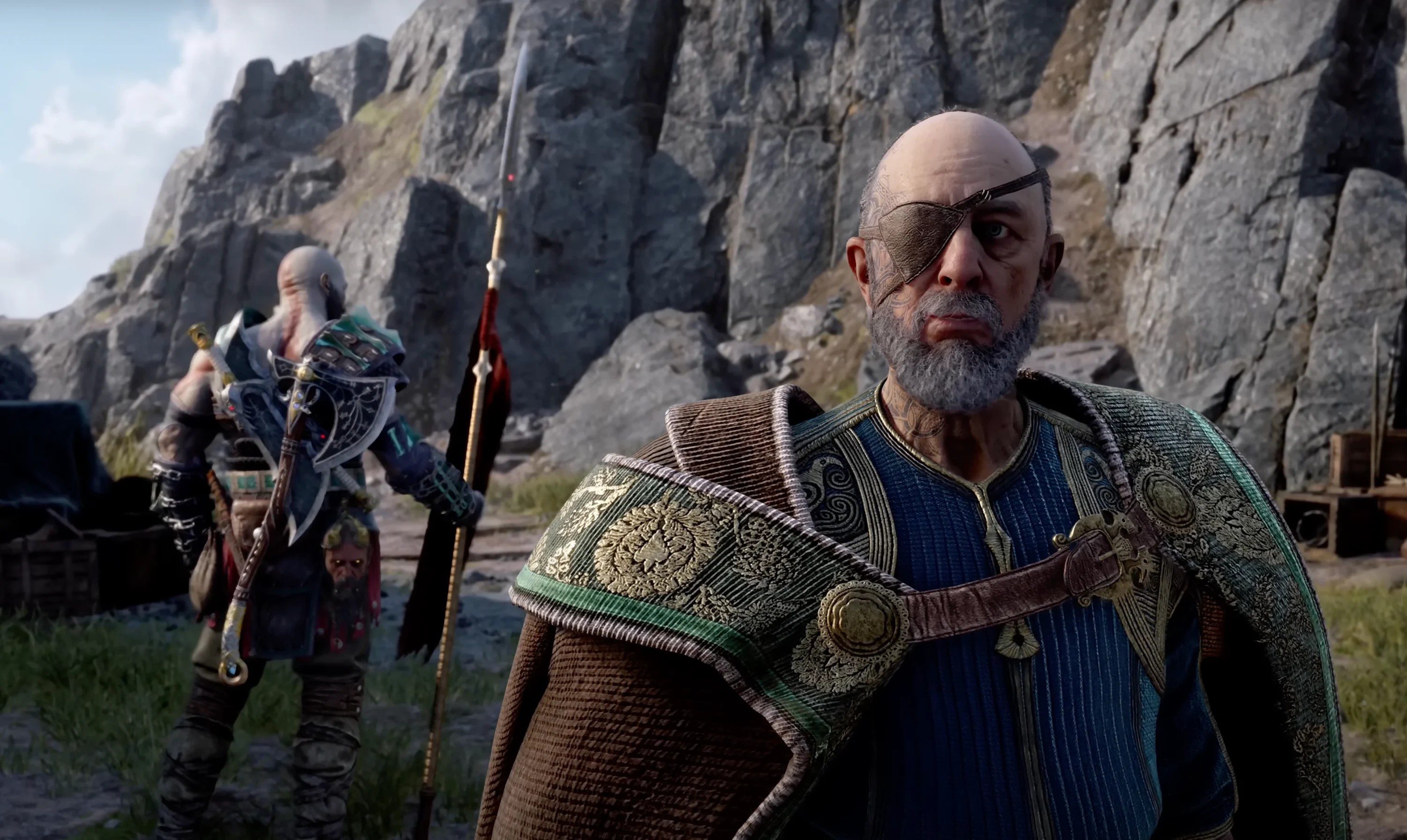
This opening sequence lasts for just over seven minutes. In that time we come away with a strong impression of Odin and Thor, fully realized characters with their own histories and personalities. Most of the characters are present only for small percentages of the overall gameplay, and yet they are forever labelled as some of the best I’ve ever encountered.
Even Heimdall, who could be dismissed as a mere evil caricature, has hidden depths to him. Small snippets of dialogue that reveal his foresight is not so much a gift as a curse. Imagine being able to see all the lies and worse thoughts of everyone around you. He sees that Atreus is deceptive when he arrives (not that Odin needed a mind reader to tell him that) and therefore hates him. That’s his personality in a nutshell, he sees the worst in everyone and therefore sees everyone as unworthy.
And his arrogance at being a god shows us just how close Atreus came to becoming just like Heimdall. In 2018’s God of War Atreus began acting arrogant and cruel when he found out he was a god, and it was only Kratos’s guidance that led him from that path. Heimdall had only Odin, who only led him deeper into that arrogant belief that he was invincible. A mistake that got him killed.
The Dialogue
Dialogue is one of the hardest arts to master in writing. It is a careful balancing act of keeping it punchy and concise, and conveying the emotion, information, and tone you need. Get too punchy and you get recent Marvel dialogue; all quip, no substance. Too emotional you get the new era Star Trek problem and it becomes exhausting. And Rings of Power shows that getting to expositional makes your characters feel unnatural and the dialogue stilted.
Ragnarök hits the mark by perfectly balancing all three of these needs. There are so many great one liners in this game, and every character gets to shine comedically, even Kratos in his own way by giving a deadpan one word answer to a question. Yet the comedy never comes at the expense of a heavy emotional moment like you see in Marvel and similar films, where a quip is immediately made after a heavy moment. Instead heavy conversations like when Kratos and Freya talk about the deaths of their children are giving the proper gravity and room to breathe. And Mimir’s exposition on the history of the world is fascinating because it’s not just conveying information, but also insight into who Mimir is as a character. His tragic connection with so much of what has happened brings weight to what could otherwise be dry and boring recounting of Norse mythology.
The pacing of the dialogue is unmatched. We’ve all played games where the gameplay and pacing smashes in the brick wall of a long, unskippable cutscene. Even the best dialogue will wear at the patience if it keeps you from the gameplay too long. Cutscenes are divided into sections of just a few minutes and longer conversations often broken up by stages in a boss fight. Banter is used to give long sections of travel and puzzle solving an almost meditative quality.
Not only is the dialogue a pleasure to listen to, but they also somehow timed these conversations to last only as long as the travel section. The conversations reach natural end points as soon as you reach the next combat section while simultaneously never feeling rushed or ended prematurely. There were only a few sections of the game where I got stuck and the conversation ran out before I reached my goal.
And the beauty of the dialogue itself cannot be overstated.
In the previous section I talked about how keeping things subtextual can be such a powerful tool. And yet Atreus and Kratos are the opposite side of the side of the equation and shows us that not everything has to be subtextual. Sometimes in the heat of the moment people will say exactly what they’re thinking and feeling. The most beautiful moments in the story occur when they are opening up emotionally to each other.
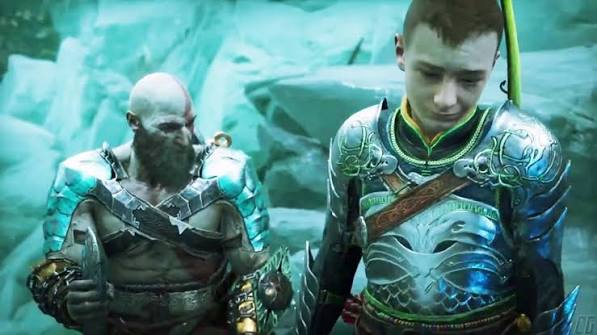
I have been falling back into my old ways. Distrustful. With you now, and… before. I chased you away.
-Kratos to Atreus
Normally I would consider this clumsy and obvious because on its face its the character explaining what’s happening to the audience. But the context is everything. This piece of dialogue occurs near the final act after we’ve been watching their relationship straining to the breaking point. Now we’ve finally seen Kratos trust his son’s judgment and realize that he was wrong. So Kratos isn’t explaining this to the audience.
He’s explaining it to himself.
Because now he finally sees it. It was never about Atreus. It was always about his own fear.
The words are further reinforced by the actor’s performance. Kratos has always stood tall, shoulders squared, ready for battle. Even in the rare moments he sits, his back is always straight. He holds himself like a brick wall both physically and emotionally, and in this scene both finally crumble. His shoulders slouch and then when he sits, he bows forward leaning heavily on his axe. Kratos is totally exhausted, so tired of holding everything back. A moment I recognized well.
And Atreus reciprocates. He admits he got reckless without his father to hold him check. And then goes a step too far: admitting he’s not ready, and Kratos has to immediately correct him.
“No. In our journey together you have grown in to a warrior worthy of your namesake. I was the one not ready.
Kratos to Atreus
And the most beautiful line of all:
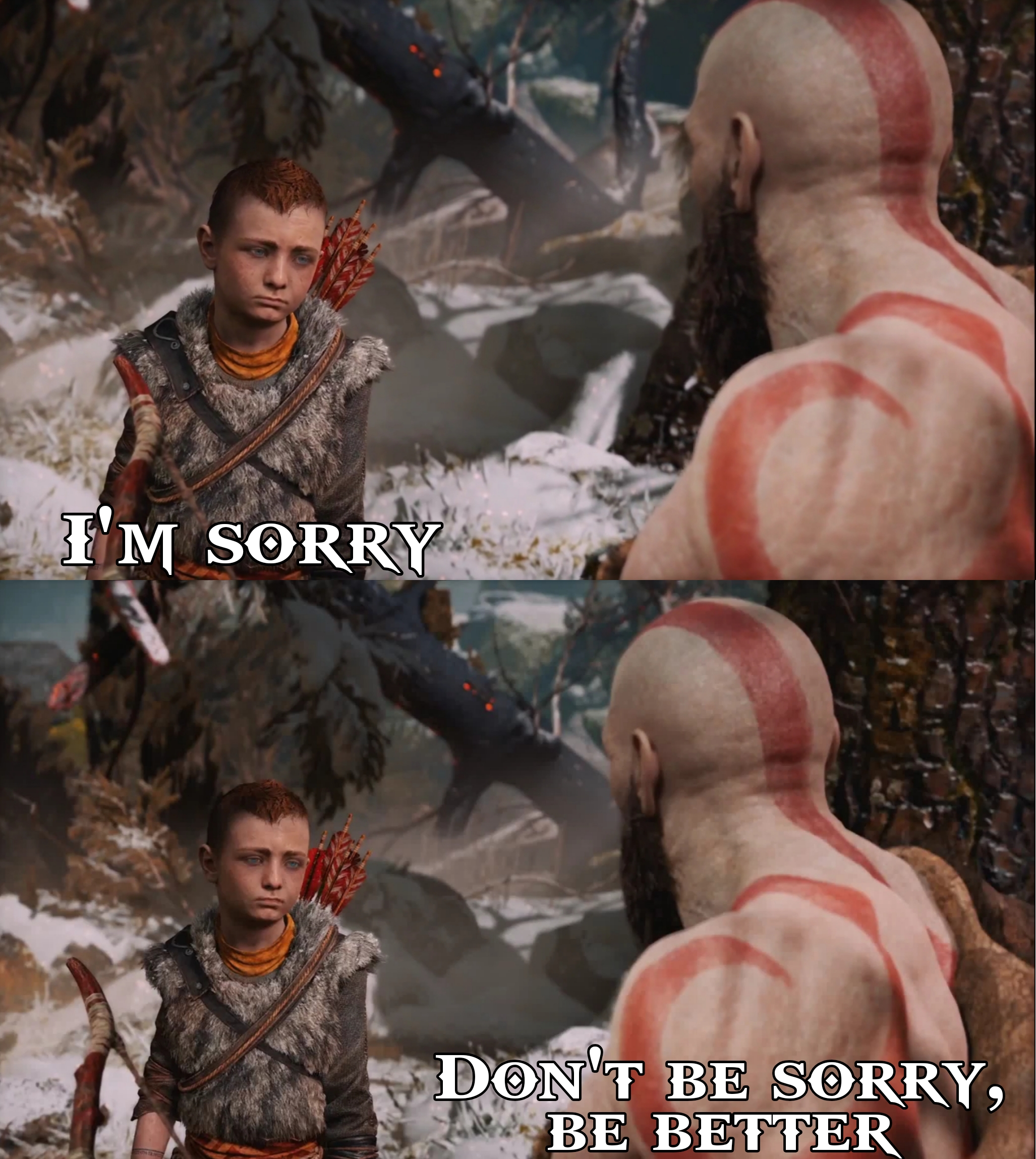
I am sorry. – Kratos
Don’t be sorry, father. Be better. – Atreus.
I believe that all writing is poetry on some level, it just takes time to see the rhyme. Atreus here repeats back to his father the same thing his father had told him years earlier. But when Kratos said it, it was cold and detached. I still remember the pang of anger I felt when I first heard him say it. To hear Atreus say it filled with love and forgiveness recontextualized the whole sentiment of that sentence.
Soon after that scene Ragnarök occurs and Kratos and Thor are soon locked in battle. After a titanic struggle, Kratos defeats Thor but instead of killing him, he spares him.
Don’t you know… what I’ve done?
Thor
One could have kept this subtextual, but in this case that would have done the scene a disservice. Thor has been defeated and Kratos’s mercy has only infuriated him more because Thor doesn’t believe he’s worthy of mercy. He’s been drowning in blood his whole life in his hopeless bid to win Odin’s approval. He slaughtered the giants, he was such an abusive father that he beat Modi to near death, and he murdered anyone his father commanded him to.
Why would anyone show mercy?
Kratos shows us with one word.
Yes!
Kratos
Just as I saw myself in Thor, so too does Kratos. His own journey through this saga has been learning to forgive himself for the crimes of his past. He goes into Ragnarök not only expecting to die and believing that would be justice for his wrongs.
But what will you do now?
I’m gonna dive into that question in the next article, but for now it is a challenge Thor doesn’t know how to handle. He reminds Kratos that they are both destroyers, monsters who know nothing but death and destruction.
The words that come next hit Thor harder than any blow from the Leviathan axe. Which leads me to the final piece that made this game one of the most impactful of my life.
The Theme
The game explores many themes: the nature of fate, generational trauma, and explorations of grief. I’ll talk more about each of them in part two, so I’ll talk instead about its most important theme:
No more. For the sake of our children. We must be better.
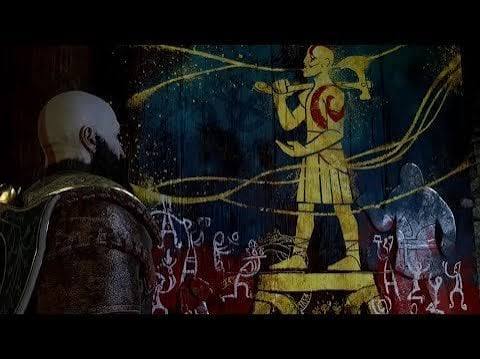
This is the core of Kratos’s journey through both games and one shared by characters like Thor. Kratos spends the course of both games haunted both figuratively, and sometimes literally, by the shame of his past. The bloodlust unleashed on the Greek pantheon and untold deaths of so many innocent lives because of it have convinced Kratos he is beyond redemption.
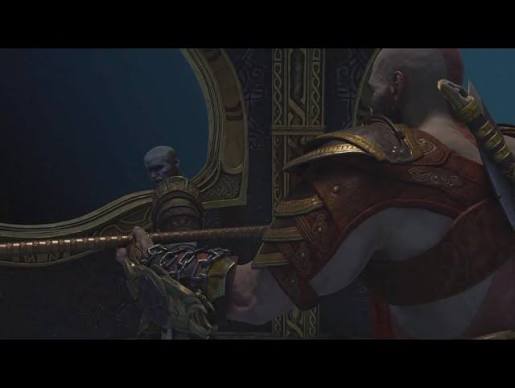
The nature of a thing is more important than it’s form.
Brok
We are defined by what we do and Kratos to his credit tries to avoid violence throughout the story. Each time he is forced into violence and death by the actions of those around him and circumstances beyond his control. He even gives Heimdall, more deserving of death than most, two chances to backdown before finally being forced to kill him.
Yet it is the nature of a thing, not its form. While Kratos sees no difference in his actions, there is a major one. In Greece, Kratos was driven by rage and vengeance. Here, Kratos has been driven only by love and the desire to protect.
But how did he change his nature?
Open your heart to the world as you have opened to me and you will find every reason to keep living in it.
Fae
That is how Kratos changed his nature, how he became better. He opened his heart to his wife. Then his son. To his friends.
And here, at the end, he even opens to his enemy, Thor. With that harsh, barked yes he showed Thor that he shared his pain. Kratos appeals to the nature of Thor, and not his form.
And Thor opens his heart in return. And he dies for it. But he dies reaching out for his daughter, for a brief moment becoming the father he always wanted to be.
Planescape Torment asked the question: What can change the nature of a man?
Opening your heart to the world is God of War: Ragnarök‘s answer.
It shows us that Kratos, a god of war, could become a god of peace. That is possible to become better.
And encourages us to become better as well.
Because we must better.
For the sake of ourselves.




Leave a Reply