In part 1 I talked about the more technical aspects of why the writing so was so spectacular. In part 2, I’m going to discuss why it was so emotionally moving. This is one of those games that reminds me of my love for telling stories. I became a writer to write stories exactly like this one.
A story that can make someone feel less alone. Perhaps even heal them a little. Even if the story only lifts one up for the briefest of moments, those moments can make all the difference.
As it did for me.
Content Warning: Descriptions of my battle with depression, suicidal ideation, and attempts at suicide are mentioned in this article.
All That Matters is the Ending
God of War: Ragnarök
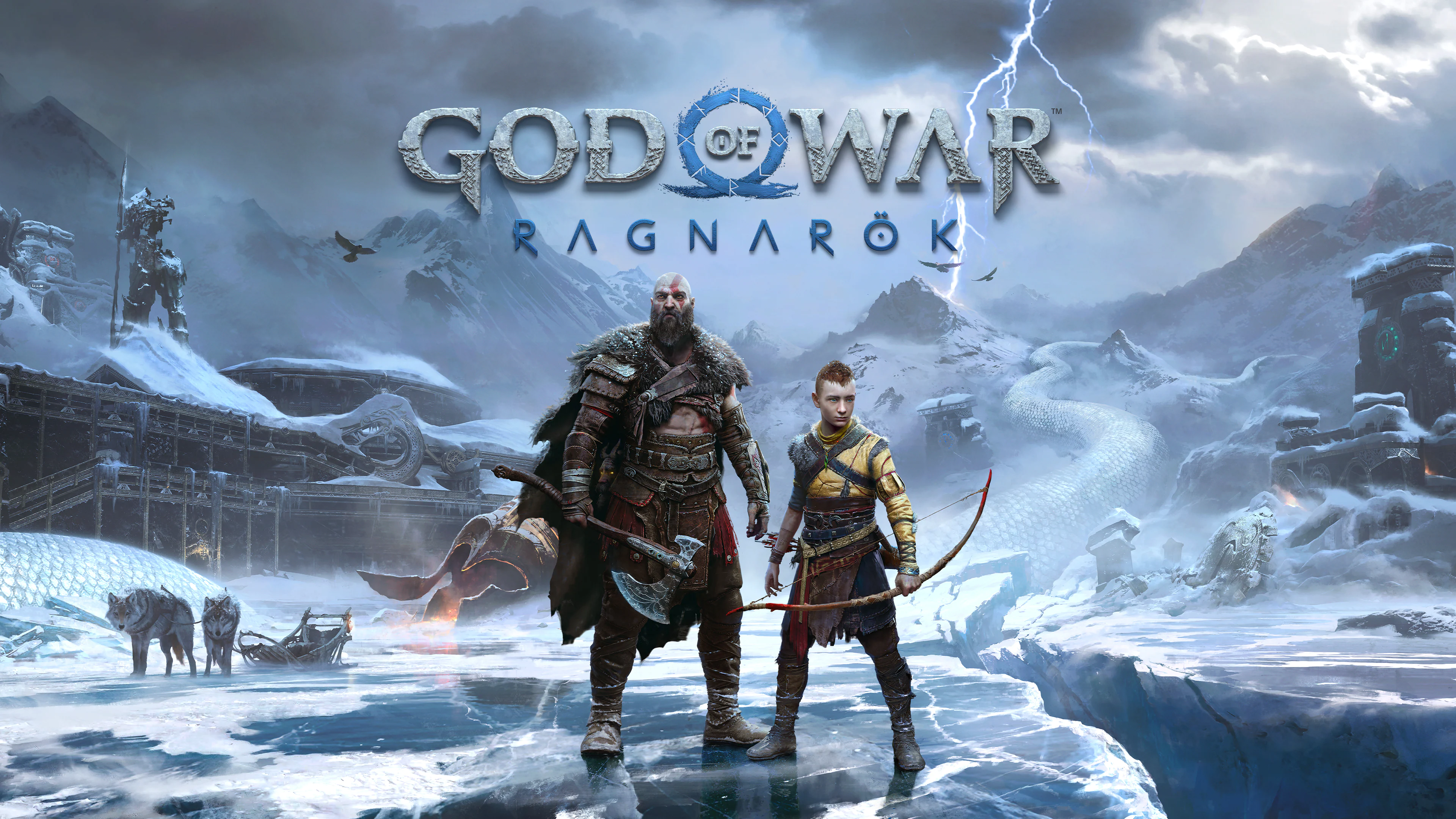
Every character in this game shares a beautiful, if sometimes devastating story with the player. Brok’s journey to come to terms with the loss of his soul. Sindri’s fall into rage-filled despair. Freya’s journey of healing from an abusive relationship and the death of a child. I could talk about all at length, and if you’d like a deep dive into their stories let me know in the comments. But for this article I’m going to focus on three stories that spoke to me in a way few tales ever have.
Thor: What Will You Do Now?
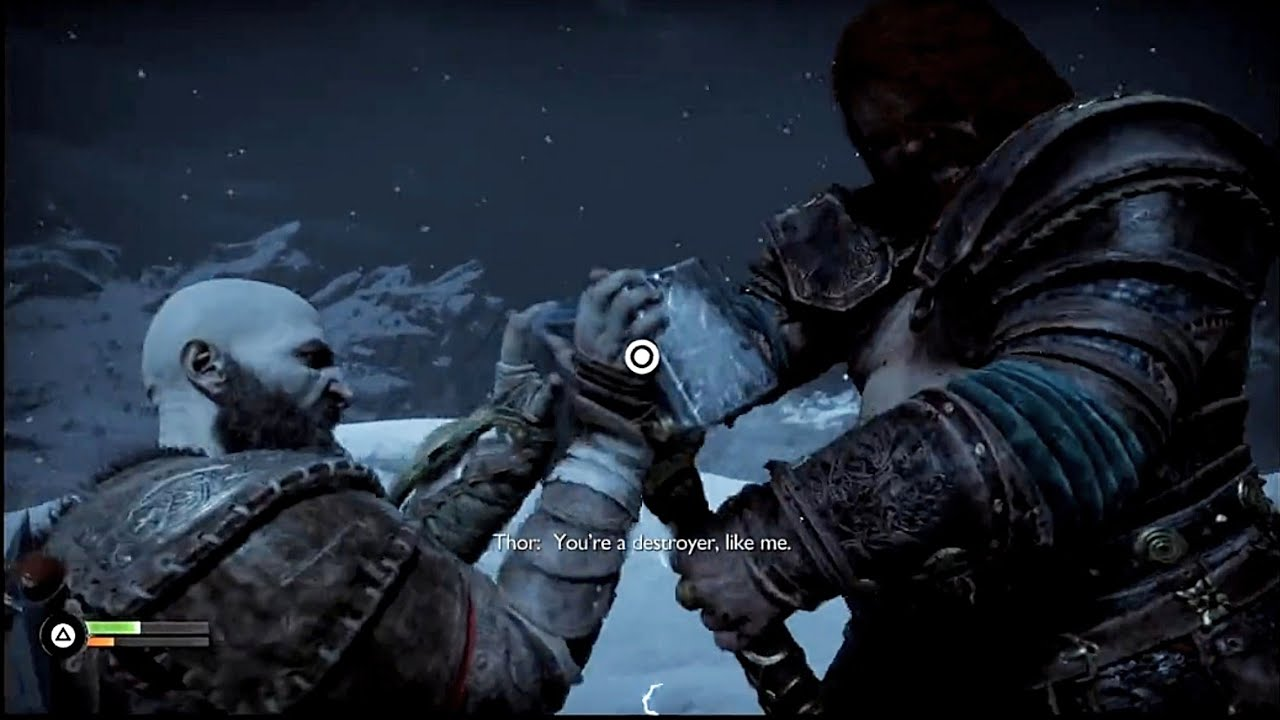
After playing 2018’s God of War, I knew I was going to empathize with Kratos in this game. What I didn’t expect, was how much of myself I would see in Thor both physically and emotionally.
I didn’t know how healing it would be to see a man who looked like me, not being treated like a monster because of how he looked.
You see, growing up, I was bombarded by popular media that used being fat as a visual shorthand for evil. Ursula, The Penguin, and countless others. I never once a saw hero that looked like me. Never once saw someone’s large stature as being a positive thing. As a child I loomed almost 6 inches over my peers. It was never seen as a good thing, in fact I was bullied relentlessly for it.
Thor looks exactly like me. I’m a big guy with a big gut. For a period there I was strong as fuck too, when I was training for highland games and strongman competitions. And though those days are now behind me, I can still muscle up tremendous weight by sheer virtue of my size.
Now you might correctly point out that Thor is not a good guy in this game. He’s a drunk, he’s a murderer who committed genocide against the Giants, and he’s abused his family. Yet the thing that struck me about this game is that it is Thor’s actions that make him a villain, not his appearance. Not once does the game use his physique to convey his moral failings, nor does it assert that his size is a response to his villainy.
There’s only one remark that could be construed that way. Heimdall, while threating Loki, sniffs and says “I thought I smelled something.” Yet this moment is used to highlight Heimdall’s cruelty, not to assert Thor’s body is wrong. It then builds off this moment to give us one of Thor’s most badass moments.
The camera angle used in this scene drives home the size difference between Thor and Heimdall. An advantage Thor uses to make Heimdall back down in addition to whatever twisted image Thor conjured in his mind. Now I hated Heimdall, as I’m sure we all did, because he reminded me so much of the bullies that tormented me as a kid. So it was delightful to see someone who looked a lot like me, standing up to this bully, in a way I wish I could have.
You might ask how, if I was so much bigger than kids my age, how I was bullied at all. And I answer, the exact same way Thor is bullied in this game, by believing I was deserving of their scorn.
Beyond our physical similarities, I immediately recognized Thor in the six minutes it takes for him to have his first conversation with Kratos. The way he seemed to force his words out from beneath a leaden weight, the sad glance away as Odin calls his dead sons useless… and the simmering rage underneath the seemingly calm exterior.
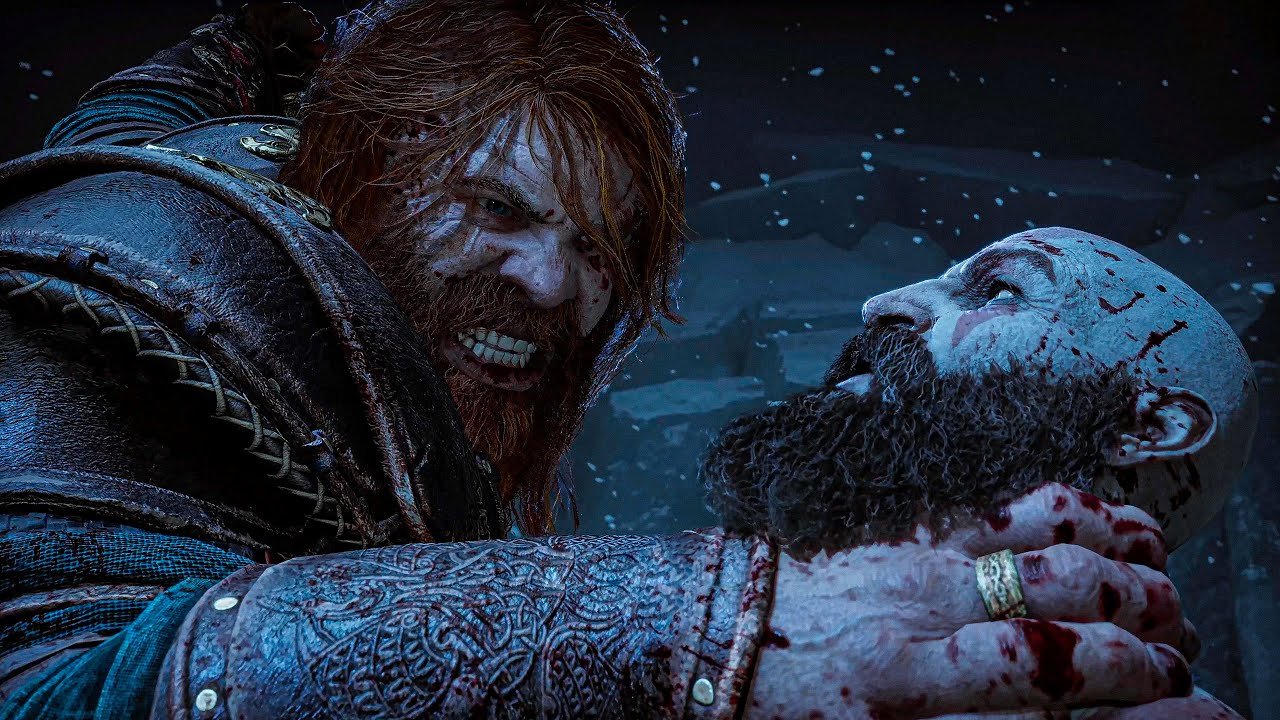
I wasn’t entirely honest when I said I never stood up for myself. A few times in middle school, I snapped. There was one time in particular when one of my more relentless bullies were laying into me with comments not unlike Thor’s family, how I stank, was fat, useless, stupid. I grabbed him by the throat and I still remember the thrill that ran through me as I slammed into him into a wall. I remember feeling so liberated by seeing how utterly helpless he was against me.
I wanted him to hurt. I wanted him afraid. And part of me wanted him dead.
And I sometimes wonder what path my life would have taken had I given into that violence.
Instead, I saw the fear in his eyes and heard the trembling in his voice as he demanded I take my hands off him. And I let him go.
I chose to be better, and begged Thor to do the same with every scene he was in.
Don’t you know what I’ve done?! – Thor
Yes! But what will you do now? – Kratos
The slaughtering of the Giants, and countless other acts of violence, Thor committed in hopes of finally being accepted by his father Odin. When travelling with Atreus, he comments on how its better not to think. Thinking invites the pain of memories of his atrocities and the faces of his victims he tries to wash away with mead. Thinking brings the pain of a father who always he told him he was too stupid to think. His father spent untold centuries, perhaps millennia, running Thor down to hone him into a weapon he could wield. And Thor finally began thinking of himself as one too.
But in the end, finally, at long last, Thor puts down his hammer. And with it, all the guilt and blood he’d carried with him.
What is this? Are you broken?
Odin
The irony is that for the first time in his life, in that moment, Thor finally wasn’t broken. He owned himself, his choices, and his fate.
“[…] Pick up the hammer and kill who I tell you to kill!” – Odin
No. – Thor
And we finally see how Odin regarded his son as he stabs a spear through his chest. He casts Thor aside like he would a broken spear or a dulled sword, useless now that it can no longer fulfill its one purpose.
But in that one moment of decision Thor dies as a god worthy of the name. He died at his best, to be embraced in Valhalla.
A beautiful end to his story.
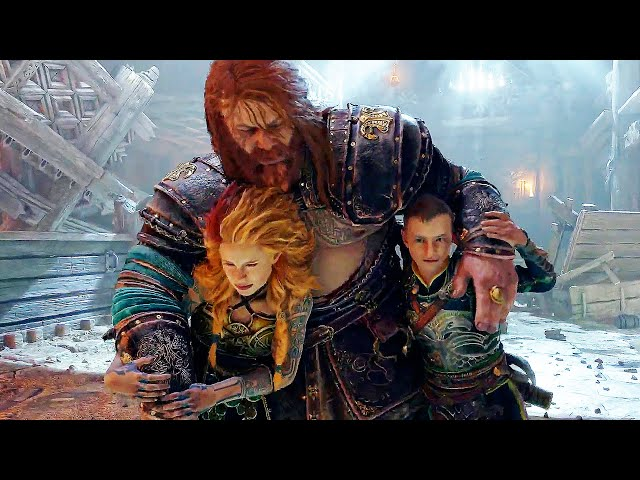
I have not left a pile of bodies in my wake, but I saw myself so clearly in Thor’s regret. I have many regrets in my life. Regrets that tell me that my life is an unfixable mess, that misery is perhaps the only thing waiting for me. Sometimes the weight of my regret leads me down the wrong roads, repeating old mistakes because they’re comfortable and known. Drowning my sorrows with food or other escapes rather than confronting my problems.
Thor reminds me of an old Turkish proverb:
No matter how far down the wrong road you’ve gone, turn around.
It’s hard to know if you’re on the wrong road. But if enough people say you are, it might be worth looking around.
Atreus: A Father’s Fear
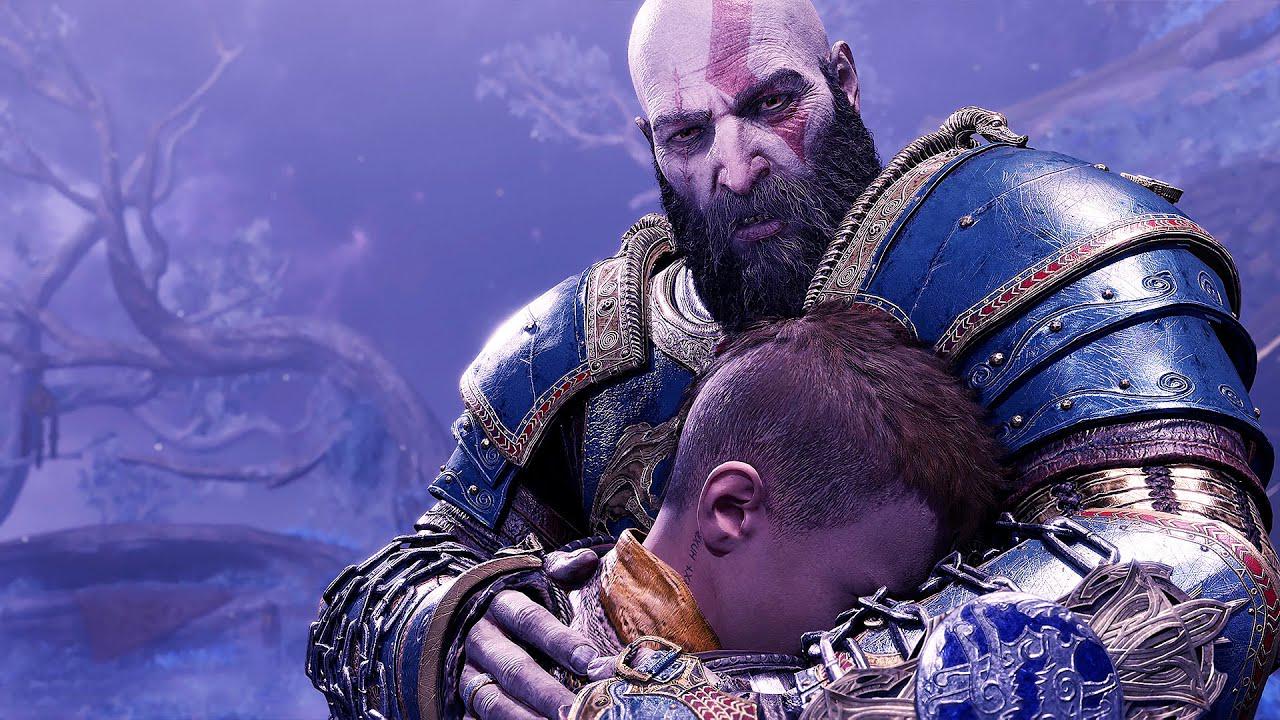
Atreus’s destiny dominates the story of both 2018’s God of War as well as God of War: Ragnarök. Can he break the cycle of hate and revenge, or will he simply continue what Kratos began, and become another God of War? The writers masterfully crafted a tale of Atreus walking the tightrope, where the slightest stumble might send him spiraling into madness and violence.
With the death of his wife, Kratos believes his son lost the only hope he had to become better than him. And despite the fact Kratos speaks seldomly and when he does its in a gruff, gravelly voice… there are times you can hear the terror in his voice. He’s terrified for his son. Terrified that Atreus will become him.
And it reminded me of my father.
He also suffered from debilitating depression and anxiety. You’d think with both of us suffering the same way that we’d have found comfort in each other. Instead, we grew up cold and distant. As as a child I was hurt by his inability to find happiness in anything I did. Then as I grew older, I began to resent him for being a constant walking reminder of my own fate: to grow old and never know relief from my suffering.
I was terrified of becoming him.
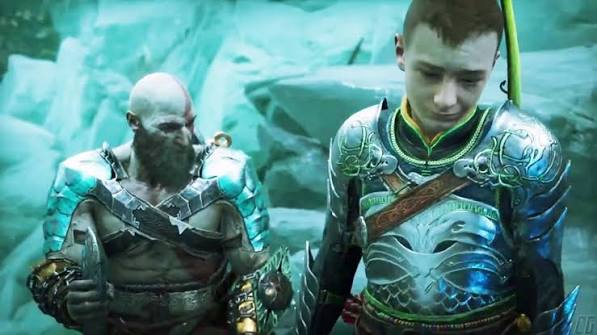
It wasn’t until playing this game, and seeing Kratos’ fears, that I realized he was terrified of the same thing. He had to watch me get worse every day of my life, growing more depressed and less functional with each passing year, until I was failing out of high school. Until I couldn’t hold down a job and was bed ridden in my room.
He had to watch me go down a path he himself had walked, powerless to do anything to stop it. Unlike Kratos however, my father didn’t live to see where that path led. He never got to see me visit Europe with my best friend, or see the remarkable relationships I’ve built with so many amazing people in my life. That despite my mental illness was able to not only survive, but even thrive for a time.
Like Kratos, my father thought he saw my fate he saw carved into the sepulcher. Unlike Kratos, he never discovered the true meaning of what he saw.
“Loki will go. Atreus Remains.”
Through Kratos’s journey with his son, I found myself understanding my own father better. I can no longer have the beautiful reconciliation that happens between Kratos and Atreus. But in watching the beautiful goodbye they shared, for a brief moment, I felt I got to say goodbye to my dad as well.
Kratos: Open Your Heart
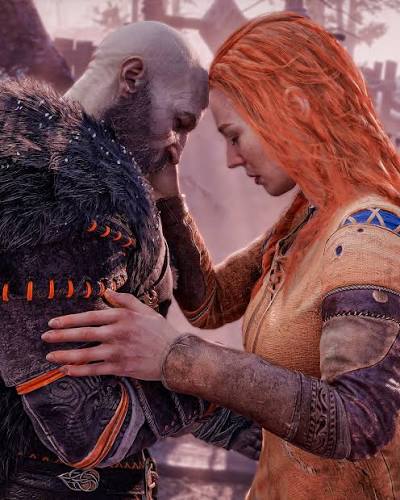
When I was a child I was struggling with emotions darker and bigger than I was capable of processing.
I wanted to die.
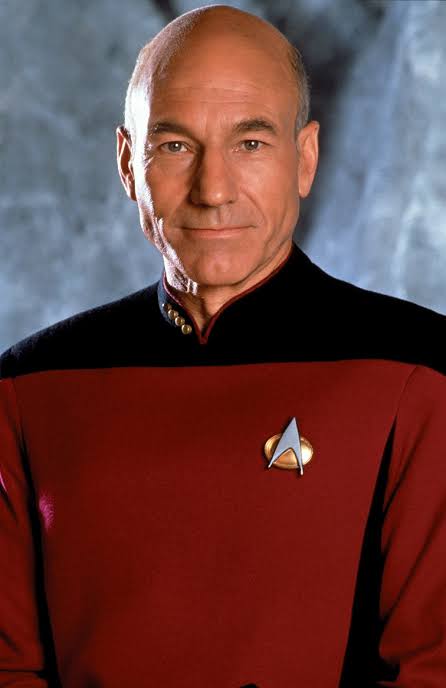
I was probably about five or six at the time. I had little grasp of what death was, but I loved Star Trek: The Next Generation. I was in pain and wanted it to stop, but I didn’t know how to say that, so instead I told my mother:
“I wish I had self-destruct button like the Enterprise.”
I remember it felt so good to say, to finally not have it boiling inside me.
It wasn’t until I saw the horrified look on my mother’s face, and the way her voice broke asking me why I would want that, that I realized I’d said something wrong. That not everyone felt this way.
I couldn’t answer my mom’s questions about why I wanted that self-destruct button. To this day I still don’t know why I want to die, but I carry that desire with me every day.
Every.
Single.
Day.
On my best days its quiet and lingers in some forgotten corner of my mind, randomly popping up when I’m stressed but easily dismissed out of hand.
Somedays it tears into my chest and threatens to crush my heart as it screams in my ear.
Those aren’t the worst days though.
The worst days are when death whispers quietly in my ear and bids me to lay down and simply drift away. It tempts me with the promise of peace, to finally set down the crushing heaviness I always carry with me. That quiet and almost loving whisper… is the hardest one to resist.
When I was in my early-20s, my bank closed my account for being overdrawn too long. It was only $78 overdrawn, but to me who was broke, that was a fortune. And after that no other bank would open an account for me. It seemed like the end of the world.
And that voice came to me. It whispered in my ear that I could make it all go away, I could stop struggling, I could lay down my burden. So I drove to a gun store, where I would buy a gun, a bullet, and then go out to the car and end it all. I was the woodsman, begging death to allow me to put down my burden.
On the eve of Ragnarök, Kratos tells Atreus a story that is, suitably, one of Aesop’s fables: The Old Man and Death. It is the story of a woodcutter who, tired of hauling wood, ask death to relief him of his burden.
I wept at the story, not only from its content, but from Christopher Judge’s amazing performance of it, the way his voice quavers and breaks. You can hear Kratos’s pain, he’s the woodsman, and he so desperately wants to put down his burden. He expects to die at Ragnarök.
Part of him wants to die there.
The final battle leaves Kratos a myriad of opportunities to die, but when Death comes, Kratos fights for his life. And when the battle is won and Kratos finishes the tale, he sounds and looks lighter, realizing that what he’s carrying… isn’t as heavy as he thought. That no matter how bleak the outlook of things might be, how hopeless it might feel, sometimes the journey surprises us. The same conclusion the Woodsman came to when Death stood before him.
It is one thing to summon death,
another to stand before him.
It wasn’t until this game that I finally realized the voice in my head hasn’t been death. The part of me that wants to die, is not death. Death is something else entirely.
Death was not the one that made me swallow half a pack of sleeping pills when I was twelve. Death was the one who kept me from swallowing the whole pack.
Death was not the one that made me sit outside a gun store for an hour. Death led me away to instead take a walk by the Puget Sound.
Death did not lead me onto that overpass in the middle of the night. Death was the one that ushered me away from the edge.
And finally, just a few months ago, it was Death that made me dump the scotch and bottle of pills.
Every time that quiet voice has whispered in my ear, promising me peace and gentleness… Death has been there, in all its terror. Yet that terror brings with it safety.
In dark times I often look back at my life and think that I’ve been losing my battle with depression. I look at the failures, the pain, the loss. It is sometimes hard for me to see that I have in fact been winning. The friendships I’ve formed, the memories I’ve made, and the things I’ve learned stand as a monuments, not to my greatness, but to my survival. I have done these things despite the weight.
I never thought I would see myself in a strong and noble character like Kratos, and yet as he related the conclusion of this fable to his son at the end of the game, that’s exactly what I saw. And as he looks at the broken, harrowing path his life took to bring him to this moment, as he rests his head against the glowing golden idol of himself as a God of Hope, I cried right alongside him.
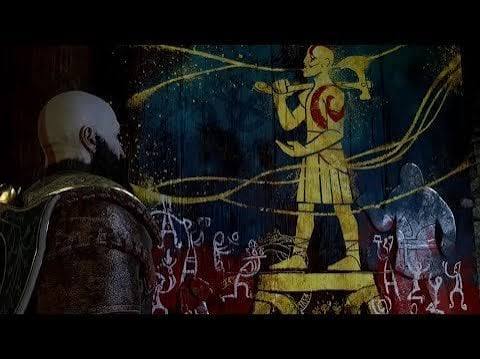
Because I wondered if it is too much to hope that maybe a beautiful future awaits me to.
For I now appreciate the broken and harrowing path my life has taken to bring me here. To have the ability to write about stories, and tell stories of my own. To be in a position to tell an audience what a game meant to me.
And to one day hope that I will write a story that will make someone see the best in themselves.
The way God of War: Ragnarök made me see the best in me.
“Open your heart to the world as you have opened it to me and you will find every reason to keep living in it.”
– Faye to Kratos
Here I am, opening my heart to the world, and hoping I’ll keep finding reasons to keep living in it.



Leave a Reply